Monday, July 12, 2021

Chapter 75: Total Eclipse of the Heart (August - December 1983)

7 August 1983

Black Sabbath - Born Again
Released: 7 August 1983
Recorded: May 1983
Producer: Black Sabbath and Robin Black

Track listing[1]
Side A
Stand Up and Shout
Holy Diver
Disturbing the Priest
Caught in the Middle
Don't Talk to Strangers

Side B
Born Again
Hot Line
Rainbow in the Dark
Zero the Hero

In the wake of Ozzy Osbourne's sudden death, there was a huge wave of nostalgia towards Black Sabbath. Osbourne's two solo albums Blizzard of Ozz and Diary of a Madman would go platinum, and the band, with Ronnie James Dio still on lead vocals, had grown closer than ever. A newly-sober Bill Ward had returned to the group after leaving in 1980 to deal with his alcoholism, and he was dead set in his sobriety following Osbourne's death.[2]

RONNIE JAMES DIO: "I came close to leaving Black Sabbath while we were mixing Live Evil. Vinny [Appice] had left the group, and I got into fights with Tony [Iommi] and Geezer [Butler] over their drug use. But then we heard about Ozzy's death, and Tony and Geezer stopped taking drugs and Bill came back to the group. There were far more important things than getting into fights over stupid shit. We had to pull our shit together." (2005)

With a newly stabilized Black Sabbath back in the recording studio, Dio, Tony Iommi, Geezer Butler and Ward (as well as Geoff Nicholls) recorded their follow up to Mob Rules, and brought forth what many would consider some of their greatest music. Upon release, Born Again became a commercial success, topping the charts in the United Kingdom and peaking at #2 in the United States, and was dedicated to the memory of Ozzy Osbourne. Along with the success of "Holy Diver"/"Disturbing the Priest" (4 August - #30 UK, #14 US) and "Rainbow in the Dark"/"Born Again" (21 October - #25 UK), Born Again would eventually hit multi-platinum certification in both countries.

October 22, 1983
Jeff Goldblum in The Big Chill, 1983. That same year, he starred as the eponymous hero in Green Lantern.
The seventh entry in the DC Appleverse marked the introduction of Hal Jordan (a.k.a. Green Lantern), the fifth member of the Justice League. Jeff Goldblum (Invasion of the Body Snatchers, The Big Chill) appeared in the film as Hal Jordan himself, co-starring alongside Geena Davis as his girlfriend Carol Ferris, John de Lancie as mentor Sinestro, and Geoffrey Rush as the villain Hector Hammond; Paul Newman also appeared as Hal Jordan's father Martin for a few flashback sequences. Tom Mankiewicz once again took on directing duties, with Green Lantern being shot simultaneously with Superman III, hence both films shared sets and locations between them (a billboard advertising Ferris Aircraft appeared in Superman III), with some locations in New York doubling for California. In addition, visual effects for the Green Lantern's powers were done by Virgo-Libra Studios, Apple's animation branch.

Following the funeral of his father during a failed rescue mission, a young Hal Jordan becomes determined to honor his legacy in any way he can. Years later, Hal finds himself working for Ferris Aircraft in Coast City and becomes enamored with the co-founder's daughter Carol (who eventually takes over the company when her father is removed from power). One day, a ship crashes onto Earth near Coast City, and Hal encounters the dying pilot, an alien named Abin Sur who is a member of the Green Lantern Corps, serving to protect all life in Space Sector 2814, where Earth is. When Abin Sur dies, his power ring chooses Hal for his ability to overcome great fear, and he vows to honor Abin Sur's wishes. Hal then meets with Green Lantern leader Sinestro, who explains the history of the corporation to him.

Geena Davis as Grace Fallon in Knight Rider, 1983. She made her cinematic debut in Tootsie in 1982, and the following year, she starred in Buffalo Bill and Green Lantern.
Meanwhile, a criminal by the name of Hector Hammond discovers the fragments of an unusual meteor in Africa in which nearby plants have evolved rapidly, and so he kidnaps four scientists and exposes them to the meteor's radiation, evolving their intellect to which Hammond forces them to create amazing new inventions. Hammond quickly becomes a celebrity thanks to this newfound profit, which catches the interest of Hal and his friend Thomas Kalmaku (John Getz), who helps him out by doubling as the Green Lantern with a duplicate power ring and costume. Hammond thinks Thomas is Hal and after capturing him, steals his ring and turns him into a monkey. The real Hal then confronts Hammond and a battle between them ensures, with Hammond losing when the charge of his ring runs out, and Thomas and the scientists are restored to normal.

Two ending scenes take place after the final battle; the first being Hal and Carol running into Barry Allen, who tells them that he's been travelling the country looking for some of the biggest heroes to prepare for a big threat against the world. The second takes place after the end credits, in which Sinestro comes across a yellow power ring of fear, hinting at a potential sequel.

Reception towards Green Lantern was mostly positive, with praise going towards the onscreen chemistry of Jeff Goldblum and Geena Davis as Hal and Carol, respectively; both would eventually marry in 1987. In a 1984 interview, Goldblum revealed that he had signed onto the Justice League film alongside Christopher Reeve, John Travolta, Elizabeth Peña and Thomas F. Wilson, as well as a planned sequel to Green Lantern tentatively subtitled Emerald Knights.

18 November 1983

Pink Floyd - About Face
Released: 18 November 1983
Recorded: August 1983
Producer: Pink Floyd and Bob Ezrin

Track listing[3]
Side A
Until We Sleep
Confusion
Love on the Air
Drop In from the Top
Boo to You Too
Out of the Blue

Side B
Cuts Like a Diamond
All Lovers are Deranged
Do Ya?
Near the End
Funky Deux

RICHARD WRIGHT: "I was in a bad state during 1982; I'm surprised I made it through the Fictitious Sports Tour at all. Juliette [his wife of eighteen years] and I had gone through a divorce and I almost left the Floyd. I needed a holiday to refresh my mind, but I didn't warn anyone in advance." (2001)

DAVID GILMOUR: "When we started work on About Face, I'd written a few songs with Pete [Townshend] and was eager to get them recorded. Rick hadn't shown up for a couple of weeks and we became concerned. I called him, but no one was home, but we did receive a letter from Rick explaining what was going on. Even then, we had to record the album around his absence with Dave Harris." (1994)

About Face would mark the last album by Pink Floyd to feature tracks that had been written during the sessions for both Mihalis and Fictitious Sports, as well as the first to feature Dave Harris as a member, who helped to fill in for Rick Wright in the midst of his absence. Wright did eventually return to the studio to overdub his parts, and he would later remarry to a woman named Franka in 1984, and they would remain together until his death in 2008.

A promo for the Fairlight CMI (Computer Musical Instrument). It was first manufactured in 1979 and discontinued in 1989 before being manufactured again in 2011. Among the artists to use it included Peter Gabriel, Kate Bush, Trevor Horn, Rick Wright and Stevie Wonder.
NICK MASON: "Our new engineer Tim [Palmer] introduced us to the Fairlight CMI; Bob [Ezrin] was very familiar with it, and we used it a lot on About Face. At least, Rick and Dave did. We later ended up using it for Identity and Learning to Fly; the CMI was innovative for the time, but it had become obsolete by the end of the 80s." (Inside Out: A Personal History of Pink Floyd, 2004)

When came to "All Lovers are Deranged", a co-write between David Gilmour and Pete Townshend, Wright took it as a thinly-veiled reference to his relationship with Juliette, which Gilmour had denied. Fortunately, the matter was resolved fairly quickly between them, with Gilmour writing "Out of the Blue" as an apology to Wright. Both songs ended up making the album.

About Face finally came out in mid-November and received mixed reviews from critics and fans, being cited as Pink Floyd's most 80s-sounding album, although that didn't stop it from hitting the Top 10 in either the United Kingdom (#2) or the United States (#6). In retrospective years, Gilmour and Wright would not speak very kindly about About Face (although Wright would claim he didn't regret doing it), although Nick Mason and Rick Wills tended to be more friendly in their views, admitting that they could've done it better.

9 December 1983

David Bowie - Let's Dance
Released: 9 December 1983
Recorded: August 1983
Producer: David Bowie and Nile Rodgers

Track listing[4]
Side A
Modern Love
China Girl
Let's Dance
Blue Jean
Without You
Dancing with the Big Boys [w/ Iggy Pop]

Side B
Loving the Alien
Ricochet
Tumble and Twirl
Shake It
Under Pressure [w/ Freddie Mercury]

David Bowie's first album since Scary Monsters (and Super Creeps) showcased a new sound for the former Rolling Stone, delving into post-disco/dance-pop territory. In between Scary Monsters and Let's Dance, Bowie would pursue non-music projects such as portraying John Merrick in The Elephant Man on Broadway (John Hurt would also play the role for the film adaptation of the same name in 1980), and making film, television and radio appearances such as in Christiane F., Baal, The Hunger and Merry Christmas, Mr. Lawrence, as well as recording the title song for Cat People.

While filming for Merry Christmas, Mr. Lawrence, Bowie grew fond of artists from the 1950s and 1960s such as James Brown, Buddy Guy, Elmore James and Albert King. Their musical ideals would influence Let's Dance, produced with Nile Rodgers of Chic, which marked the peak of Bowie's popularity and commercial success. The album topped the charts in the United Kingdom and peaked at #4 in the United States. "Let's Dance" (#1 UK and US), "China Girl" (#2 UK, #7 US), "Modern Love" (#2 UK, #10 US), "Blue Jean" (#4 UK, #5 US) and "Loving the Alien" (#10 UK) were all also big hits in 1983 and 1984.

Footnotes
  1. Tracks are sourced from OTL's Born Again and Dio's Holy Diver. In addition, Ronnie James Dio sings all of the lead vocals.
  2. In OTL, Bill Ward did indeed return to Black Sabbath to record Born Again (with Ian Gillan of Deep Purple on lead vocals, taking over for Ronnie James Dio), but he left again prior to the tour because of his difficulty in remaining sober.
  3. Tracks are sourced from David Gilmour's About Face, Zee's Identity, Richard Wright's Wet Dream and Nick Mason's Fictitious Sports.
  4. Tracks are sourced from OTL's Let's Dance and Tonight. For vinyl releases, "Modern Love", "China Girl", "Let's Dance" and "Loving the Alien" are the single remixes that can be sound on the boxset Loving the Alien (1983-1988), while for CD releases, the full length versions are used. "Under Pressure" is the Rah Mix found on Greatest Hits III.
Author's Comments

At long last, we have come to the 75th chapter! It's not exactly big in terms of length, but it does mark the end of the 1981-1983 period (well, save for an Apple update in the next chapter), so we're getting close to the end of the first draft with five chapters to go. The Black Sabbath storyline was inspired directly from In the Heart of Metal, in which Ozzy Osbourne died in 1982 and the band continues with Ronnie James Dio, which butterflied away the band Dio. The timeline never gave complete track listings to any of the fictional albums, so for Born Again, I went by what was listed as being on the album and filled the gaps from there. Hopefully it sounds good track by track.

Not much to say about David Bowie here; this is his final appearance in the series until the finale. Similarly, Pink Floyd has one more album; I originally wasn't going to have them make an album for 1985, but I ended up making one anyway. You'll see what it's like when it comes out. And as for the Green Lantern movie, I had difficulty coming up with the cast, but I got a bit of help out from Helter Skelter on Discord, although I was very much on my own for the storyline. Believe me; coming up with fictional films is even harder than making fictional albums!

Monday, June 28, 2021

Chapter 74: Sweet Dreams (Are Made of This) (June - October 1983)

June 17, 1983
Patrick Stewart in Playing Shakespeare, 1982. That same year, it was announced that he had been cast in the role of Brainiac for Superman III. Robert Vaughn was originally considered for the role before Stewart was cast.
A third Superman movie had been in the planning stages since 1979, just as the production on Superman II was closing down. Ilya Salkind, David and Leslie Newman would return to write the script while Richard Donner would pass on directing duties to Tom Mankiewicz (although Donner would stay on as producer). However, John Williams did not return to score the music due to his commitments to Return of the Jedi, and so Ken Thorne took over as composer, with Williams credited for the original Superman themes. Alongside the return of Christopher Reeve, Margot Kidder, Jackie Cooper and Marc McClure, the newcomers were Patrick Stewart as the villain Brainiac, Dudley Moore as Mr. Mxyzptlk and Helen Slater as Kara Zor-El/Linda Danvers, also known as Supergirl.

A mysterious asteroid lands on Earth, which prompts interest from Clark Kent; it turns out to be a space pod from the planet Colu, and its sole occupant is a young woman by the name of Kara Zor-El, who takes on the civilian identity of Linda Danvers, who is later revealed to be Clark's cousin. A flashback reveals that when Krypton exploded, Kara was originally meant to arrive on Earth alongside the baby Kal-El, but her space pod had been knocked off course and she ended up in suspended animation for over twenty years before landing in Colu instead, where she is raised by Brainiac who becomes her surrogate father. While Linda adjusts to life on Earth, she and Clark come across an impish trickster from the fifth dimension known as Mr. Mxyzptlk, who uses his abilities to play pranks.

Some time later, Brainiac lands on Earth, having followed Linda the whole time, hoping that she'll use her abilities to cause destruction, but thanks to Clark's guiding hand, she's using them for good, and if even dubbed "Supergirl" in the press. In retaliation, Brainiac uses a personality machine to corrupt and manipulate Superman, therefore turning him evil. Supergirl fights him and with the help of Lois Lane, restores Superman back to good. A final battle with Brainiac then commences after the group time travels to a fiefdom in the Middle Ages that the villain has taken over, leading to him getting stuck there while the heroes return to the present. At a café, Clark and Linda meet up with Mr. Mxyzptlk (who had helped them travel back to the present) who gives them a cryptic warning about a greater evil coming to Earth.[1]

Helen Slater as Kara Zor-El/Linda Danvers/Supergirl in Superman III, 1983. Not even twenty years old upon the film's release, Superman III marked Slater's cinematic debut, and her performance was acclaimed by critics and fans alike.
CHRISTOPHER REEVE: "For an early draft of Superman III, Ilya wanted to have Brainiac fall in love with Supergirl, his 'daughter', but she was in love with Superman instead, and the cousins would possibly even marry at the end. However, Margot didn't like that, and nor did I, Helen or Patrick. We felt it devalued Superman and Lois' relationship from the first two movies, and so the romance plot was cut out entirely." (2008)

In contrast to the two previous Superman films, critical reaction to the third film ranged from mixed to positive, with criticism being directed at the complexity of the plot and the villain's motivations (although Patrick Stewart's performance was acclaimed; even then, Gene Hackman as Lex Luthor, who did not appear, was generally viewed as the better villain, as was Terence Stamp as General Zod). On the other hand, Helen Slater's performance as Supergirl was praised, as was Dudley Moore as Mr. Mxyzptlk, and the ending left many moviegoers excited about a potential team-up film about the Justice League. This was later confirmed in a press release at the end of 1983, and Justice League was due for a release date in the spring of 1985.

8 July 1983

The Yardbirds - Carouselambra
Released: 8 July 1983
Recorded: 1983
Producer: Robert Plant and Jimmy Page

Track listing[2]
Side A
Other Arms
In the Mood
Messin' with the Mekon
Big Log

Side B
Thru' with the Two Step
Horizontal Departure
Carouselambra

The Yardbirds' fifteenth album was their first since 1969's Going Down Like a Lead Zeppelin to not reach #1 in either the United Kingdom (#3) or the United States (#5) - while Stairway to Heaven and Axe Ivy both reached #1 in the former country, they stalled out at #2 in the latter. Despite this, "Big Log" managed to chart fairly well in the Top 40 on both sides of the Atlantic (#4 UK, #11 US), as did "In the Mood" (#30 UK, #14 US), with both receiving music videos of their own. Critics were mixed towards Carouselambra, and many seemed to reflect on Jimmy Page's thoughts during the recording process:

JIMMY PAGE: "I personally thought Axe Ivy was our best album of the 80s, but Robert and [John Paul] Jones were in over their heads by playing too many synthesizers for Carouselambra. I felt that my work as a guitarist was being pushed to the side and wasn't shy in saying so. I even tried to tell them that if they didn't get a clue, sooner or later, the Yardbirds would be dead faster than you could play the entirety of Robert Johnson's music." (1997)

3 October 1983
Tony Banks, 1982.
In the midst of an eight-month break between the members of Genesis, Tony Banks had recorded his second solo album, The Fugitive, which was later released that June. This was his first album in which he sang the lead vocals instead of relying on a guest vocalist. While A Curious Feeling had some pop elements, they were more upfront in The Fugitive. The album received a mixed to positive response from critics and topped out at #33 in the United Kingdom. "This is Love" was the single preceding the album that May, peaking at #47 in the United Kingdom.

TONY BANKS: "Mike, Kim and I got back together in the spring of '83 to record the follow-up to Abacab, but we didn't have any songs ready for it. We just played some jams and then based the songs around them." (2005)

KIM BEACON: "Tony and Mike each thought about taking a lead vocal on the album, each having done so for their respective solo albums around that time, and I favored the idea, wanting to show that I wasn't the only guy behind Genesis. We were a group effort, and always have been. I think Shapes proves that." (2013)

Genesis - Genesis (The Shapes Album)
Released: 3 October 1983
Recorded: Spring 1983
Producer: Genesis and Glyn Johns

Track listing[3]
Side A
Mama
That's All
Home by the Sea
Promises

Side B
When It All Comes Down
Taking It All Too Hard
Just a Job to Do
Silver Rainbow
It's Gonna Get Better

Genesis' self-titled release, often referred to as The Shapes Album because of the cover, marked their first since 1974's The Lamb Lies Down on Broadway in which all the music was credited to all the members. In addition to that, Tony Banks and Mike Rutherford showed more prominence in performing the backing vocals than they had ever done on any previous album. Among the tracks that has been left unfinished was "Illegal Alien", which was intended to be a satirical approach on undocumented immigrants coming into the United States, although it was abandoned due to the insensitive nature of the lyrics.

Reception to The Shapes Album was generally very positive, topping the charts in the United Kingdom and reaching #3 in the United States, and the first two singles - "Mama" and "That's All" - also reached the Top 10 in both countries, the former even topping the charts in the United Kingdom. The album displayed Genesis heading towards a more radio-friendly approach, and Banks considered the overall sound as something that the band had longed for even when Peter Gabriel was their lead singer. Rutherford would also refer to The Shapes Album as one of his favorite Genesis albums.

Summary of single releases from Genesis' The Shapes Album
  • "Mama" / "It's Gonna Get Better" - 22 August 1983 (#1 UK, #5 US)
  • "That's All" / "Taking It All Too Hard" - 3 October 1983 (#7 UK, #2 US)
  • "Home by the Sea" / "Second Home by the Sea" - 23 January 1984 (#28 UK, #16 US)

Footnotes
  1. The plot synopsis for Superman III is based upon a treatment written by Ilya Salkind in December 1980 and released online in 2007. It was rejected for being too complex and expensive to shoot, which resulted in an entirely different Superman III directed by Richard Lester and a standalone Supergirl movie directed by Jeannot Szwarc in 1984. Both films were critically panned, with the latter becoming a box-office bomb.
  2. All tracks are sourced from Robert Plant's The Principle of Moments, excluding "Carouselambra", taken from In Through the Out Door.
  3. All tracks are sourced from OTL's Genesis (The Shapes Album), excluding "Promises" and "When it All Comes Down", both from a performance by Kim Beacon in 1989. As has been stated many times before, all tracks are performed by Beacon.
Author's Comments

Well, that was the latest chapter for Strawberry Peppers Mk1 done and dusted. It came out later than I would've liked, but I've had a lot of projects to deal with lately, so I ended up working on and off on it; sorry about that. I've only got six more chapters to write up until this first draft is finished. Not much else to talk about here; Genesis and its members are carrying on like normal, Superman's got the third movie it might have gotten with Richard Donner on board, and the Yardbirds are continuing down Robert Plant's solo trajectory from OTL. I was going to include Yes' 90125, but I ended up cutting it instead. That's why I've posted a shorter chapter than usual.

Monday, May 31, 2021

Chapter 73: Break My Stride (September 1982 - June 1983)

October 1982
A screenshot from the pilot episode, Thomas Down the Mine, filmed 1982. It was later reshot for the first series of Thomas the Tank Engine and Friends. The above screenshot was reused from the pilot.
It had been a few years in the making since Britt Allcroft first met with Reverend Wilbert Awdry about the possibility of adapting his Thomas the Tank Engine books for television. Having already bought the rights from the publishers, Kaye & Ward, at the cost of fifty thousand pounds, and been provided the money to produce the show by Apple Corps, production on the show could commence.

Between September and October 1982[1], a low budget, pre-production test pilot had been filmed to showcase how the show would look, based upon the story "Down the Mine" from the book Gordon the Big Engine (published 1953). It took only three weeks (fifteen business days) to film the pilot, ten of which were done on the actual filming itself. Reaction to the pilot was generally very positive, giving Allcroft and the rest of the crew the okay to proceed work on a full series.

The question now was, when the series came out, who would narrate the stories?

10 September 1982 - 1 February 1983
Paul McCartney and Michael Jackson, 1982. Three duets were recorded between the pair; "The Girl is Mine" was released on the latter's Thriller, recorded April 14-16, 1982. "Say Say Say" and "The Man" were recorded April and May 1981, with additional recording on August 25, 1983, but not released until October 3, 1983 as a non-album single.
JOHN LENNON: "With hindsight, we may not have done Quadruple Fantasy to begin with. We set the bar too high for what many called our Phase Two." (2003)

GEORGE HARRISON: "A lot of people were demanding for a follow up album to Fantasy, and we as the Beatles had been off of the radar for nearly a year. It was like the Mania of the 60s all over again, only with a much bigger crowd of old and new fans. Our backs were up against the wall. What could we have done to meet their demands?" (1995)

PAUL McCARTNEY: "I came up with the concept of war and peace, and the four of us wrote most of the songs around it; we had a few leftovers from when we did Quadruple Fantasy, and we brought them back for War and Peace. The best of the bunch was John's 'Nobody Told Me', which he initially offered Ringo to sing." (2013)

RINGO STARR: "As much as I loved 'Nobody Told Me', I told John that it better suited him than me." (2019)

After a year apart to focus on individual careers as well as their families, the Beatles went back into the studio that September to record War and Peace. A fair number of tracks were connected to the theme of contrasts such as "Keep Under Cover", "That's the Way It Goes", "You Can't Fight Lightning" and "Borrowed Time", as well as the bookend tracks "Tug of War" and "Pipes of Peace". In between were love songs "Wake Up My Love", "So Bad" and "Dear Madeline", the latter of which was dedicated to John Lennon's wife Madeline Kahn. The sessions lasted sporadically up to the beginning of February, with George Martin once again producing. It was later announced that War and Peace would be out this April.

February 1983
Behind the scenes for Thomas the Tank Engine and Friends, 1983. The episodes being filmed around this time were Thomas and James and Strike Out!.[2]
Meanwhile, filming had begun work on what would become Thomas the Tank Engine and Friends; it would take up until August to film the thirteen episodes of the show, each ten minutes long, along with a standalone special that would premiere around Christmas. Post-production would wrap up on 24 September. While the series was being filmed, Britt Allcroft set out to find a narrator.

BRITT ALLCROFT: "The family were in the family room, and they were watching television. And I wasn't in the room, I was going past the door and I heard this voice. 'Oh my God; who's that?' And that's it. That's the voice! And I went into the room, and Ringo was being interviewed on a British chat show - I think it was Michael Parkinson. And I said, that's it; that's it! It's Ringo!" (date unknown; possibly late 1980s)

Allcroft's reasoning for Ringo being the narrator was because she thought children would relate to him, not because of his fame as a Beatle. However, he was reluctant to do so since he had never read any of the original Railway Series books as a child (he was almost five when the first book, The Three Railway Engines, was published on 12 May 1945), and thought children would be interested in modern things like dinosaurs with lasers. But it was after reading the books and meeting with Reverend Wilbert Awdry himself that Ringo had changed his mind.

RINGO STARR: "The others asked me where I'd been for a few days, and so I told them about that new children's show being produced under Apple Television. I showed them a few Thomas books and they had varying degrees of interest." (2015)

Ringo Starr with the model of Thomas the Tank Engine, 1983.
JOHN LENNON: "I'd been asked a few years prior and thought the idea of narrating a series of talking railway engines was ridiculous, even told them to fuck off. I brought a few books home with me, Freddie and Alice took interest in them, and Maddy insisted that I give it a proper chance, and so I did." (2010)[3]

PAUL McCARTNEY: "At the time, I had scripted a film about a day in the lives of the Beatles, like A Hard Day's Night, but twenty years later, y'know. The others said that it would never sell, and I was forced to abandon it in the end. Working with Thomas turned out to be a better use of our time, as it turned out. I loved working on it." (2015)[4]

GEORGE HARRISON: "I was somewhere between John and Ringo when it came to enthusiasm, but I played along anyway. Turned out to be more fun than I'd thought it would be." (1999)

With Ringo accepting the role as narrator, the additional enthusiasm from the other three Beatles took Britt Allcroft by surprise. After the initial shock had worn off, it was decided to give the engines their own distinct voices; John would provide the voices for Thomas himself as well as Gordon, Paul as Henry and Percy, George as Edward and James, and Ringo as Toby and Sir Topham Hatt, the Fat Controller. Allcroft would provide additional voices along with director David Mitton and music composers Mike O'Donnell and Junior Campbell, who based the theme song around the feel of the Beatles' "Mean Mr. Mustard". The recording sessions took around eight days, including Ringo re-doing some lines as the Fat Controller due to the tone of his voice. It would be over a year before the new series was unveiled to the world.

22 April 1983

The Beatles - War and Peace
Released: 22 April 1983
Recorded: 10 September 1982 - 1 February 1983
Producer: George Martin

Track listing[5]
Side A
Tug of War
I'm Stepping Out
Wake Up My Love
Keep Under Cover
Dream Away
Borrowed Time
In My Car

Side B
Mystical One
So Bad
Nobody Told Me
That's the Way It Goes
You Can't Fight Lightning
Dear Madeline
Pipes of Peace

War and Peace reached #1 in the United Kingdom for just two non-consecutive weeks, and no higher than #7 in the United States, which was a poor showing by the Beatles' standards. To make things worse, the first single, "Pipes of Peace" backed with "Dream Away" (11 April), despite charting at #1 in the United Kingdom, failed to reach the Top 20 the United States (#23) before quickly disappearing from the charts altogether.

Reception towards the album was overall poor, with one review saying, "Seriously? This is the best the Beatles could come up with after Quadruple Fantasy?" Others were just as harsh, if not more so, with comments such as, "Are the Beatles even relevant in America anymore?" or "With the Rolling Stones having gone off the radar and the Who splitting up, the Beatles now join them by putting out their worst album to date with War and Peace; 1983 looks to be the death knell of the 60s." All four Beatles, but especially Paul McCartney, took the slagging in the press pretty hard.

JOHN LENNON: "You know what a lot of those critics don't understand? Many of us artists from the 60s like the Beatles, Stones, the Who, what have you weren't just the 60s; you don't simply hang on for a decade or longer without feeling like you're part of something new and still have something to say. If this year is the death of the 60s, then why are we still listening to 'My Generation', 'Jumping Jack Flash' or 'Yesterday' on the radio instead of something like 'Pipes of Peace' or 'Athena'? It sounds as though some people are stuck in the 60s." (1983)

If there was any redeeming aspect to War and Peace, it was John's "Nobody Told Me", backed with the non-album B-side "Average Person", released as a single on 10 June. It charted much better in America at #5, while it reached #6 in the United Kingdom, receiving consistent praise from critics. Still, despite John's defiant stance in a television interview a few weeks after the album's release, the Beatles were now worried about their future. Could anything, if at all, be done to salvage their good name, or if they were doomed to remain a nostalgia act, unable to compete in the current market against their past selves or current musical acts like Duran Duran and the Culture Club? Was this the end for the Beatles... again?

3 June 1983

Electric Light Orchestra - Secret Messages
Released: 3 June 1983
Recorded: December 1982 - February 1983
Producer: Jeff Lynne

Track listing[6]
Side A
Secret Messages
Loser Gone Wild
Bluebird
Take Me On and On

Side B
Stranger
No Way Out
Beatles Forever
Letter From Spain
Danger Ahead

Side C
Four Little Diamonds
Train of Gold
Endless Lies
Buildings Have Eyes
Rock 'n' Roll is King

Side D
Mandalay
Time After Time
After All
Hello My Old Friend

Secret Messages was the Electric Light Orchestra's tenth official studio album, twelfth if the compilation albums Light Years (1978) and All Over the World (1980) were included. Much like its predecessor Time, it topped the charts in the United Kingdom for a few weeks, and it topped out at #12 in the United States. Secret Messages was also a double album, and with compact discs having just been released in North America and Europe, it was ELO's first album under that format. As usual, a tour followed the album lasting up to early 1984.

JEFF LYNNE: "One of the tracks on Messages, 'Beatles Forever', was the first to be recorded. By the time the album came out, War and Peace was thrashed by critics, and I kept it on ELO's album as a response to them. Looking back, it was so fawning and over the top that I was tempted to remove it altogether, and maybe redo it at some point." (2018)

Summary of single releases from Electric Light Orchestra's Secret Messages
  • "Rock 'n' Roll is King" / "After All" - 6 June 1983 (#6 UK, #10 US)
  • "Secret Messages" / "Four Little Diamonds" - 3 September 1983 (#20 UK, #58 US)
  • "Stranger" / "Train of Gold" - 5 December 1983 (#17 UK)

Footnotes
  1. In OTL, the pilot was filmed in March and April 1983. I moved production forward with the likelihood that with Apple Corps gaining the rights to co-produce and distribute the show, it could be worked on earlier. Likewise, the filming for the first series was moved forward from the original dates of production (September 1983 - March 1984).
  2. Thomas and James is OTL's Thomas and the Breakdown Train and James and the Coaches, while Strike Out! is based upon Tenders and Turntables and Trouble in the Shed.
  3. In OTL, John Lennon had been offered to narrate the show, but he told the producers to "fuck off". Had he survived past 1980 and saw how successful Thomas the Tank Engine was, I'd imagine that John would've regretted rejecting the gig, even praising Ringo's narration.
  4. This means that Give My Regards to Broad Street never gets produced in TTL; the money used to produce it goes onto more worthwhile projects. In OTL, filming had started in November 1982.
  5. Tracks are sourced from Paul McCartney's Tug of War and Pipes of Peace, John Lennon and Yoko Ono's Milk and Honey, George Harrison's Gone Troppo, and Ringo Starr's Old Wave and Stop and Smell the Roses. "Dear Madeline" is OTL's "Dear Yoko" from Double Fantasy.
  6. Track listing is based upon the original double album version of Secret Messages, the 2001 release of which was the primary source. "Buildings Have Eyes", "Mandalay" and "Hello My Old Friend" are all sourced from Afterglow, and "Beatles Forever" remains unreleased officially.
Author's Comments

Happy Memorial Day, everyone! This is another chapter that I'd been looking forward to writing up, largely because I'd been a fan of Thomas the Tank Engine since I was little, especially with Ringo Starr's narrating the first two seasons of the show. I even spiced it up a bit by having the other three Beatles involved in the production as well. I originally had other actors involved based upon who was popular in the acting scene of the 1980s at the time like Nigel Planer as Henry, Brian Blessed as Gordon, Rowan Atkinson as James and Jim Broadbent as Sir Topham Hatt. Man, I'd have loved to hear what that would've sounded like! That's more or less how I picture the engines' voices in the 1980s.

Outside of that, things aren't going so hot for the Beatles right now; it can't be all positive, after all, but it isn't as bad as it seems for them outside of America. Rest assured, things do get better for them. War and Peace is the last album by them being discussed in this story, but I'm still not done with them yet. Likewise, this is the final major appearance of the Electric Light Orchestra in the story, though they've not broken up (yet).

Meanwhile, I'd like to give a little shout out to both the Something Creative and A Crazy Gift of Time blogs, both of which have gone through a reboot. So far, they're both off to a great restart, and if you haven't already, I recommend checking both of them out. At one point, I do intend on a Strawberry Peppers reboot, but before I can do so, I've got seven more chapters to write up, bringing the total up to eighty, which is a nice round number. At the moment, I'm working on a draft timeline for what I'm calling The Second Coming, and it's constantly evolving. Once I finally start the writing process (whenever that is), I'll be starting up a new blog while this one will stay up as the first draft so you can see the differences between the two versions.

Monday, May 17, 2021

Chapter 72: Back in Black (May - December 1982)

21 May 1982

Smile - Fun in Space
Released: 21 May 1982
Recorded: June 1981 - March 1982
Producer: Smile, Reinhold Mack and David Bowie

Track listing[1]
Side A
Staying Power
Dancer
Future Management
Back Chat
Action This Day

Side B
There Must Be More to Life Than This [w/ Michael Jackson]
Calling All Girls
Las Palabras de Amor
Soul Brother
Under Pressure [w/ David Bowie]

Smile's first post-Paul McCartney album was preceded that October last year with "Under Pressure", a duet with David Bowie that reached #1 in the United Kingdom. Following that was another duet in April, "There Must Be More to Life Than This" (#10 UK, #4 US) with Michael Jackson, who was already starting work on what would later become the greatest selling album of all time. Smile's resultant album, Fun in Space, topped out at #3 in the United Kingdom and #16 in the United States, and received generally mixed reviews from critics who called it no better or worse than their last album with Paul McCartney (1980's Coming Up). However, many hoped that Smile could find their footing in a world in which the Beatles were together again.

BRIAN MAY: "We did end up finding our footing after Paul got back together again with the Beatles and Denny [Laine] having passed on. Fun in Space was something of a transitional album for Smile in a lot of ways." (2007)

ROGER TAYLOR: "Freddie's integration into the band wasn't really that hard since Brian, Deacy [their nickname for bassist John Deacon] and I were basically backing musicians for him. A lot of people felt that as the 70s progressed, we gelled better with Fred than we did with Paul, and it wasn't hard to see why." (1998)

Smile's Fun in Space Tour began on 9 April, shortly before the release of the album, and lasted all the way up to 3 November, spanning sixty-nine shows across Europe, North America and Asia. During the tour, the album's third single, "Las Palabras de Amor" (#17 UK, #56 US) was released in June. The tour was generally well received, even including many pre-1982 hits from Freddie Mercury such as "Bohemian Rhapsody", "Crazy Little Thing Called Love" and "Somebody to Love", as while as Paul McCartney-era Smile cuts like "Sheer Heart Attack" and "Now I'm Here", showing promise for Smile to continue into the 1980s. Though it would be a while yet before the world heard from Smile again or saw them play live.

16 July 1982

Roger Waters - Spare Bricks
Released: 16 July 1982
Recorded: 1981 - 1982
Producer: Roger Waters and Bob Ezrin

Track listing[2]
Side A
In the Flesh (Film Version)
When the Tigers Broke Free (Full Version)
Bring the Boys Back Home (Film Version)
Another Brick in the Wall (Drugs) (Film Version)
Mother (Film Version)

Side B
Have a Cigar [ft. Roy Harper]
The Last Few Bricks

Even before he recorded the album, Roger Waters had always planned to make a film of The Wall. His dream would come to life thanks to director Alan Parker, with Gerald Scarfe directing the animated sequences as seen in musical numbers such as "Goodbye Blue Sky". Waters himself was originally going to play the role of the story's anti-hero Floyd Pinkerton, but screen tests were not so successful. Instead, Bob Geldof of the Boomtown Rats would play the role.

While the film was being made, Waters set about making a soundtrack to accompany the film, featuring some songs he had written in mind for The Wall, but he left off in order to put out a double album rather than a triple. However, at the last moment, rather than recording new songs that would likely have not ended up in the film, it was decided that the soundtrack album Spare Bricks (#7 UK, #10 US) would mainly feature alternate versions of songs from The Wall, including "In the Flesh", "Bring the Boys Back Home", "Mother" and "Another Brick in the Wall (Drugs)", as well as the full version of "When the Tigers Broke Free". The only new songs were "Have a Cigar" (an outtake from the Pink Floyd/Hunky Dory collaboration Wish You Were Here, featuring Roy Harper on vocals) and the instrumental suite "The Last Few Bricks".

Roger Waters' The Wall (sometimes released with the accompanying captions Alan Parker and Gerald Scarfe Present... and ...Starring Bob Geldof) was released to a generally positive reception under Metro-Goldwyn-Mayer (MGM) Studios, although it barely broke even at the box office due to stiff competition against E.T. the Extra-Terrestrial and An Officer and a Gentleman. As for the leftover songs, Waters would find a new use for them following a lengthy, undeclared war between the United Kingdom and Argentina...

August 20, 1982
Al Pacino, early 1980s. He portrayed Leonard Snart (Captain Cold) in The Flash.
The fourth entry in the DC Appleverse was not the planned Batman adaptation, (although it would eventually come out in time for a Christmas release) but rather, an adaptation of The Flash, directed by James Cameron in his theatrical debut[3], and with a score by Jerry Goldsmith, starring newcomer Thomas F. Wilson as the titular hero[4], Michelle Pfeiffer as Iris West and Al Pacino as the villain Captain Cold. Freddie Mercury's "Don't Stop Me Now" played during a sequence in the film. Reception towards the film was generally positive, but not quite as strong when compared to the Superman and Wonder Woman films.

The Flash concerns a young forensic chemist known as Barry Allen, living with a single father in Central City and having the unfortunate reputation for constantly running late, although he does everything possible to impress his crush, Iris West. One night, Barry gets drenched with unspecified chemicals due to a lightning bolt strike and he gains the ability to run at super-human speeds. Meanwhile, a man by the name of Leonard Snart lives in an ice truck and learns about the new superhero called The Flash in a newspaper article, wondering how he could stop the young superhero in his tracks - literally. He breaks into a cyclotron lab and designs a weapon to harness the power of freezing, donning the identity of Captain Cold.

Captain Cold then commits a series of crimes across Central City - fortunately, no one is killed - and tries to take Iris as his bride, but Barry comes to her rescue and sends his archenemy to prison. Both Barry and Iris fall in love, and some time after the attack, Iris meets up with fellow reporter Lois Lane (with Margot Kidder reprising the role), and the latter asks the former if she knows of anyone with super abilities themselves, having heard of the Flash vs. Cold battle from Metropolis. Once again, this appears to be hinting towards a future big project...

November 2, 1982

Tom Petty & Mudcrutch - Long After Dark
Released: November 2, 1982
Recorded: 1981 - 1982
Producer: Jimmy Iovine and Tom Petty

Track listing[5]
Side A
A One Story Town
You Got Lucky
Keep a Little Soul
Deliver Me
Change of Heart
Keeping Me Alive
Finding Out

Side B
We Stand a Chance
Straight into Darkness
The Same Old You
Turning Point
Between Two Worlds
A Wasted Life

By the end of 1982, Mudcrutch's lineup had consisted of mainstays Tom Petty (vocals, guitar, bass, keyboards), Mike Campbell (guitar, bass, backing vocals) and Benmont Tench (keyboards, backing vocals), as well as drummer Stan Lynch (having replaced Randall Marsh in 1976) and bassist Howie Epstein (replacing Ron Blair, who had been part of the group since 1976 following Charlie Souza's departure). Long After Dark (#38 UK, #4 US) was the first album to feature this slightly revamped lineup. The first single off of the album was "You Got Lucky"/"Between Two Worlds" (October 22; #8 US), followed up by "Change of Heart"/"Mudcrutch Beach Party"[6] (February 11; #63 US), released the following year.

December 10, 1982
Martin Scorsese (center) and Robert de Niro (right) on the set of Raging Bull, 1980. The former would later direct Batman under Apple Films while the latter portrayed the villainous Joker.
Originally slated for release in 1981, Martin Scorsese's Batman was released just two weeks before Christmas, despite some scripting issues. The fifth entry of the DC Appleverse starred John Travolta as the caped crusader himself, Robert de Niro as his most well-known archenemy the Joker, and a young Tom Cruise as Dick Grayson. Also starring were Harvey Keitel (Commissioner Jim Gordon), Peter Cushing (Alfred Pennyworth) and Diane Keaton (Vicki Vale), with a cameo role by Billy Dee Williams as Harvey Dent, having played Lando Calrissian in the Star Wars trilogy (Return of the Jedi would later come out in May 1983). Vangelis composed the score for Batman, having also done so for Chariots of Fire under Apple Films.

In Gotham City, vigilante Batman stops a bank robbery orchestrated by a criminal known as the Joker, but he manages to escape before Batman can catch him. Later, billionaire Bruce Wayne - also Batman - attends a circus performance by the Flying Graysons, but a bomb is detonated, killing John and Mary, but their son Dick survives and Bruce takes him in under his wing, emphasizing with the young boy's plight over losing his parents. It's later revealed that it was the Joker who detonated the bomb unless Batman revealed himself. At that time, photojournalist Vicki Vale is investigating to see who Batman really is, and starts dating Bruce Wayne.

The Joker continues to wreak havoc across Gotham City as it approaches its bicentennial, including putting district attorney Harvey Dent out of commission and vandalizing the Museum of Art. Police Commissioner Jim Gordon teams up with Batman to stop the Clown Prince of Crime in his tracks, and Dick learns what it means to be a hero, taking on the identity of Robin. While the celebrations go on, Batman and Robin confront the Joker on the top of a cathedral where he holds Vicki Vale hostage; the villain attempts to get Robin to kill him so he could "avenge his parents", but the young boy resists, and the Joker is arrested and sent to Arkham Asylum, leaving the door open for a potential return.[7]

John Travolta, 1981. He rose to fame starring in Carrie (1976), Saturday Night Fever (1977) and Grease (1978) prior to portraying Batman in the DC Appleverse.
Batman
was released to wildly positive reviews from both critics and fans alike, and it is confirmed in a press release that a sequel was already in production, with some scenes having been filmed already. Not only that, with the success of the Wonder Woman and Flash films, it gave Warner Brothers confidence that DC heroes outside of Superman and Batman could be profitable, and the green light was given to expand upon this cinematic universe. Alongside the Batman sequel, plans were being made for a third Superman film, a second Wonder Woman film, as well as a film starring Green Lantern and a film that brought all five superheroes thus far together.

Meanwhile, Marvel Comics had begun making plans for their own cinematic universe, beginning with their own equivalent to Batman, Iron Man, due for a release next year starring Michael Keaton.

Footnotes
  1. All tracks are sourced from Hot Space ("Back Chat" is the single remix), excluding "Future Management" from Roger Taylor's Fun in Space and "There Must Be More to Life Than This", which is a fan remix no longer available online.
  2. All tracks from Side A are from the bootleg The Wall Film Soundtrack Fan Edit, excluding "When the Tigers Broke Free", sourced from The Final Cut. For Side B, "Have a Cigar" is from Wish You Were Here, and "The Last Few Bricks" is an edit of both parts one and two from The Complete Another Brick in The Wall suite.
  3. This butterflies away Piranha II: The Spawning; James Cameron would later cite The Terminator as his true first film.
  4. For those who are wondering, Jeffrey Jay Cohen will take over the role of Biff Tannen in Back to the Future, as well as other family members in the sequels. This is because Michael J. Fox is chosen as Marty McFly outright.
  5. All tracks from Long After Dark are utilized. "Keep a Little Soul" and "Keeping Me Alive" are both sourced from An American Treasure. "Turning Point" is from disc five of Playback, Through the Cracks.
  6. "Mudcrutch Beach Party" is OTL's "Heartbreakers Beach Party".
  7. The synopsis for Martin Scorsese's Batman draws rough parallels to Tim Burton's Batman in OTL, with the Robin subplot lifted from Batman Forever.
Author's Comments

Not much I can say here regarding the music side of things; the Smile lineup has been finalized, Roger Waters has put out a companion piece to The Wall, and things are normal for Mudcrutch. Each of them will be touched upon at least one final time before we get to Live Aid. And of course, the DC Appleverse will continue for at least five more films over the next three years.

This isn't related to the story, but I couldn't help but notice that a fair number of alternate history timelines have gone either on hiatus or have been abandoned altogether (and a couple of which are actually completed); I'm genuinely amazed that Strawberry Peppers has lasted as long as it did despite its rather sporadic schedule as of late.

Monday, April 19, 2021

Chapter 71: Ashes to Ashes (April - September 1982)

23 April 1982

The Yardbirds - Axe Ivy
Released: 23 April 1982
Recorded: September 1981 - January 1982
Producer: Robert Plant and Jimmy Page

Track listing[1]
Side A
Burning Down One Side
Moonlight in Samosa
Pledge Pin
Fool in the Rain
Mystery Title

Side B
Worse Than Detroit
Fat Lip
Sea of Love
Swan Song

The Yardbirds' first album of the 1980s, the long-awaited follow up to In Through the Out Door, brought back the return to their rock roots with some rhythm and blues influence. Among them was a cover version of Phil Philips' 1959 hit "Sea of Love", which was released as a single shortly before the release of Axe Ivy, peaking at #3 in the United States. However, it did not chart as well in the United Kingdom, at a comparatively lowly #56. But even that didn't stop the album from topping the charts there (it stalled out at #2 in the United States, kept out of the top spot by Fleetwood Mac's Mirage).

JOHN BONHAM: "The album title Axe Ivy was a play on words; it was the Yardbirds' fourteenth album, and in Roman numerals, it's X-I-V [pronounced "acks"-"eye"-"vee"]. Get it? I came up with it myself; no one else had a good enough idea for the title, so it stuck." (2007)

Axe Ivy received generally positive reception from critics and fans, being regarded as a return to form for the Yardbirds, and the tour that followed up ensured that they would stick around for a long time and still hold their place in the rock and roll world.

14 May 1982

The Clash - Rat Patrol from Fort Bragg
Released: 14 May 1982
Recorded: 1980, September 1981 and November 1981 - January 1982
Producer: The Clash

Track listing[2]
Side A
Straight to Hell
Know Your Rights
Rock the Casbah
Red Angel Dragnet

Side B
Should I Stay or Should I Go
Ghetto Defendant
Sean Flynn

Side C
Car Jamming
The Beautiful People Are Ugly Too
Atom Tan
First Night Back in London

Side D
Inoculated City
Death is a Star
Cool Confusion
Idle in Kangaroo Court

For the past few years, the Clash was one of Apple's most successful punk rock groups, and proved to critics and listeners that they were willing to put anything in their music. Even the most stupid-sounding shit, they turned to gold. But by the end of 1981, the cracks in their relationship were beginning to show.

JOE STRUMMER: "We were basically in two camps by that point; me and Paul [Simonon] on wanting to return to our more punk roots, and Mick [Jones] and Topper [Headon] wanting to continue evolving our sound. It didn't help that Topper was in the midst of a drug addiction." (1997)

MICK JONES: "I was unhappy; I felt estranged from the rest of the group and I was living with Ellen [Foley; his then-girlfriend] in New York. I thought, 'This must have been how Paul McCartney felt when he felt estranged from John, George and Ringo in the early 70s.' It felt like lightning was about to strike twice at Apple Records." (2009)

The Clash in Philadelphia, 1982.
Between January and March, the Clash embarked on their Far East Tour in Japan, Australia, New Zealand, Hong Kong and Thailand. Shortly afterward, they returned to London to listen to the music recorded in New York and decide what to do with the material. In the middle of arguing over how their next album should sound, they heard the news of a tragedy from the other side of the pond.

PAUL SOLOMON: "One of us caught a newspaper article saying that Ozzy Osbourne had choked on his own vomit. What really got to all of us was what Randy Rhoads said concerning his final words to Ozzy. 'You'll kill yourself, you know? One of these days.' It was very damning to read, and that made us realize that one of us could drop dead and we'd live the regret of never making up with him before then. We felt closer as a group, realizing that if we were to stay together, we'd have to cut the crap and make the album that all of us wanted to put out. And after that, we'd take a break for a while." (2007)

Rat Patrol from Fort Bragg came out that May, backed by singles "Know Your Rights" (#30 UK), "Rock the Casbah" (#14 UK, #5 US) and the double A-side, "Should I Stay or Should I Go"/"Straight to Hell" (#10 UK, #37 US), respectively released 23 April, 11 June and 17 September. The album topped the charts in the United Kingdom and peaked at #4 in the United States, becoming the Clash's best selling album to date. As the band was taking a hiatus to sort out their differences and drug problems, it would be a while before the world heard from them again.

Meanwhile, the original album art depicting the execution of Viet Cong member Nguyễn Văn Lém in 1968, photographed by Eddie Adams, sparked controversy due to insensitivity despite that it expressed the direct lyrical references to the Vietnam War and the notion of "urban warfare" that were prominent in the album. In wake of the controversy, the cover was replaced by a band photo.

25 June 1982

Fleetwood Mac - Mirage
Released: 25 June 1982
Recorded: November 1981 - March 1982
Producer: Fleetwood Mac, Richard Dashut and Ken Caillat

Track listing[3]
Side A
Love in Store
Dirty Creature
That's Alright
Log Cabin Fever
Gypsy
Only Over You

Side B
Take a Walk
Straight Back
Put a Candle in the Window
If You Were My Love
Hello Sandy Allen
Wish You Were Here

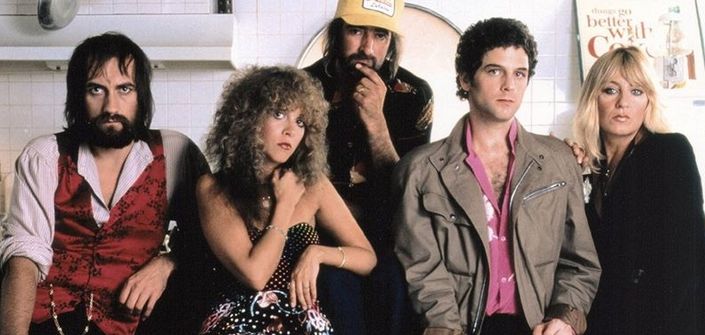
Fleetwood Mac's first album since 1977's Rumours had come out the week following Crosby, Stills & Nash's Daylight Again under Apple Records, and it was their first to feature Neil Finn as guitarist and vocalist. Mirage carried on with the band's soft rock sound from Rumours and topped the charts in the United States for five weeks, and topped out at #3 in the United Kingdom. Finn's "Dirty Creature", Stevie Nicks' "Gypsy" and Christine McVie's "Love in Store" were all Top 20 hits in the United States.

MICK FLEETWOOD: "It was just before Mirage came out when Lindsey reached out to me and John a few days after Ozzy Osbourne was declared dead from excessive drinking. I could see that he clearly regretted his behavior following the aborted Tusk sessions, and it seemed as if a few years away from us had given him a lot of time to work on his behavior." (1998)

STEVIE NICKS: "Christine and I were reluctant to let him back into the band - Neil didn't have an opinion on the matter, for he stayed to the sides to see what would unfold. Lindsey had hurt Christine the most, and she was afraid of being in the same recording studio as him, just in case he had another meltdown. But still, we gave Lindsey the benefit of the doubt and let him join us for our short American tour." (2014)

Fleetwood Mac, 1982. Not pictured: Neil Finn.
Lindsey Buckingham's return to Fleetwood Mac for their Mirage Tour (September 1 - October 31) also coincided with the band headlining the first US Festival in San Bernardino on September 5, for which they were paid half a million dollars. Among other artists during September 3-5 included the Ramones, Talking Heads, Dave Edmunds, the Cars, Pat Benatar and Tom Petty & Mudcrutch, some of whom were under Apple Records or its two subsidiaries, Highway 61 or Swan Song.[4]

The tour was met with a few hiccups, but fortunately, none were connected to band relations. On October 5, Stevie Nicks' best friend, Robin Anderson, had died from leukemia at the age of 34, following a pregnancy leading to a premature birth to a baby boy, Matthew - thankfully, he survived. After the death of Robin, Nicks would give off some of her most electrifying, heartfelt performances as a tribute to her fallen friend, later impulsively marrying her widower Kim Anderson in 1983, thinking that it would be best for Matthew. Sadly, Stevie and Kim would separate after only three months, and divorce by 1984.

Around the time of Robin's death, two shows were postponed when Nicks suffered from walking pneumonia, but soon recovered. The October 22 show at The Forum in Inglewood was filmed and later released under the title Fleetwood Mac In Concert - Mirage Tour '82 under Apple Films. Lindsey Buckingham would remember that for just about every show, it felt as though he had never left to begin with, finally being integrated back into the band. When asked what Fleetwood Mac's plans for the future were, he said, "Who knows? We might do another album. Hopefully it won't take five years to put out!"

Summary of Fleetwood Mac releases, 1982
  • "Dirty Creature"  / "That's Alright" - 11 June 1982 (#85 UK, #14 US)
  • Mirage - 25 June 1982 (#3 UK, #1 US)
  • "Gypsy" / "Cool Water" - 4 September 1982 (#34 UK, #7 US)
  • "Love in Store" / "Take a Walk" - 18 October 1982 (#10 US)
  • "Hello Sandy Allen" / "Only Over You" - 12 December 1982 (#71 UK)

4 September 1982

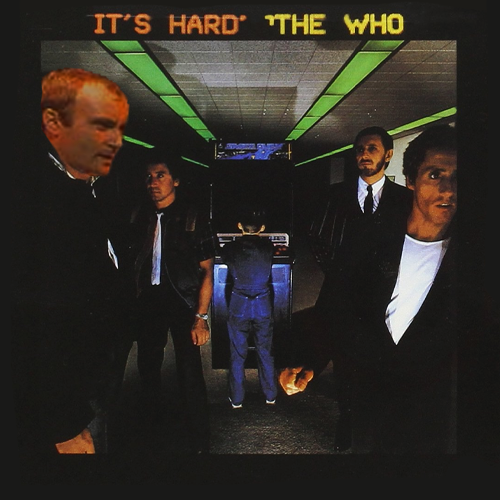
The Who - It's Hard
Released: 4 September 1982
Recorded: June 1982
Producer: Glyn Johns

Track listing[5]
Side A
Athena
It's Your Turn
Cooks County
It's Hard
Dangerous
Eminence Front

Side B
I've Known No War
One Life's Enough
One at a Time
Why Did I Fall for That
Man on the Corner
Cry If You Want

The Who's second post-Keith Moon album, It's Hard (#11 UK, #8 US), received polarizing reviews from critics. Some praised it and even considered it a spiritual sequel to Lifehouse from a decade prior, while others condemned the album, some even going so far as to say Phil Collins had "ruined" the Who. Having a solo career alongside his position as their drummer likely didn't help the hostility towards Collins either. "Athena" backed with the non-album B-side "A Man is a Man" was released as a single at the same time as It's Hard, reaching #40 in the United Kingdom and #28 in the United States. Neither of the follow up singles - "Eminence Front" (25 December 1982) and "It's Hard" (February 1983) - reached the Top 40 in either country.

PHIL COLLINS: "It was a pretty miserable time to be a part of the Who; Pete [Townshend] was depressed, often under heroin and constantly fighting with Roger [Daltrey] and John [Entwistle] over what to play on stage. I just sat there and let everything unfold. I almost regretted leaving Genesis in the first place, wondering what might have happened had I decided to stay with them." (2002)

The Who would embark on a farewell tour in North America with the Yardbirds as support, with the final show taking place on December 17 in Toronto, Canada.[6] Pete Townshend would spend part of 1983 writing new material for a potential follow-up to It's Hard, but was unable to come up with music that would be good enough for the Who to record, and so on 16 December 1983, he announced his departure from the Who, which ended the band for good. This left Phil Collins free to focus on his solo career for the remainder of the 1980s, although he would still play with them for live performances up until 1989.[7]

Footnotes
  1. "Fool in the Right" is sourced from In Through the Out Door, "Sea of Love" from The Honeydrippers: Volume One, and "Swan Song" is "Midnight Moonlight" from The Firm. The remaining tracks all come from Robert Plant's solo album Pictures at Eleven.
  2. Track listing is based upon what Mick Jones proposed for Rat Patrol from Fort Bragg before it was pruned down to become Combat Rock. The four outtakes ("The Beautiful People Are Ugly Too", "First Night Back in London", "Cool Confusion", "Idle in Kangaroo Court") can be found on the 2013 box set Sound System.
  3. Neil Finn's tracks ("Dirty Creature", "Log Cabin Fever", "Take a Walk", "Hello Sandy Allen") are all taken from Time and Tide, due to Split Enz breaking up earlier than in OTL. The remaining tracks are sourced from OTL's Mirage, with "Put a Candle in the Window" and "If You Were My Love" being outtakes from the same sessions, found on the 2016 deluxe edition. The latter track was eventually re-recorded for Stevie Nicks' 24 Karat Gold: Songs from the Vault in 2014.
  4. This actually happened in OTL, except it was during Lindsey Buckingham's final tour with Fleetwood Mac until 1997.
  5. "Man on the Corner" is sourced from Genesis' Abacab, taking the place of "A Man is a Man". Otherwise, It's Hard follows the exact same track listing as OTL. In addition, Roger Daltrey takes lead vocals on "Man on the Corner" while Phil Collins sings co-lead on "Cooks County" instead of Pete Townshend.
  6. In OTL, the Clash went on tour with the Who; because of the former taking a hiatus by that point, the Yardbirds take their place instead.
  7. In OTL, Kenney Jones played with the Who for one-off performances at Live Aid in 1985 and at the BPI Awards Ceremony in 1988, as well as their 25th anniversary tour in 1989. He was not, however, invited for their performance at the Rock and Roll Hall of Fame Induction Ceremony in 1990, and in 1996, Zak Starkey became the Who's new touring drummer starting with their Quadrophenia Tour. With Phil Collins on board, all of this will happen.
Author's Comments

Not much to comment on here; a fair number of storylines are coming to close. The Yardbirds' 1980s discography will draw parallels to Robert Plant's (I mean, he is the lead singer of Led Zeppelin, after all), and those of the Clash and Fleetwood Mac will be revisited once more in 1985 in universe. The Who's storyline is just about finished barring their appearance at Live Aid, which I'm sure most of you can predict, but we will hear from Phil Collins once more in 1985.