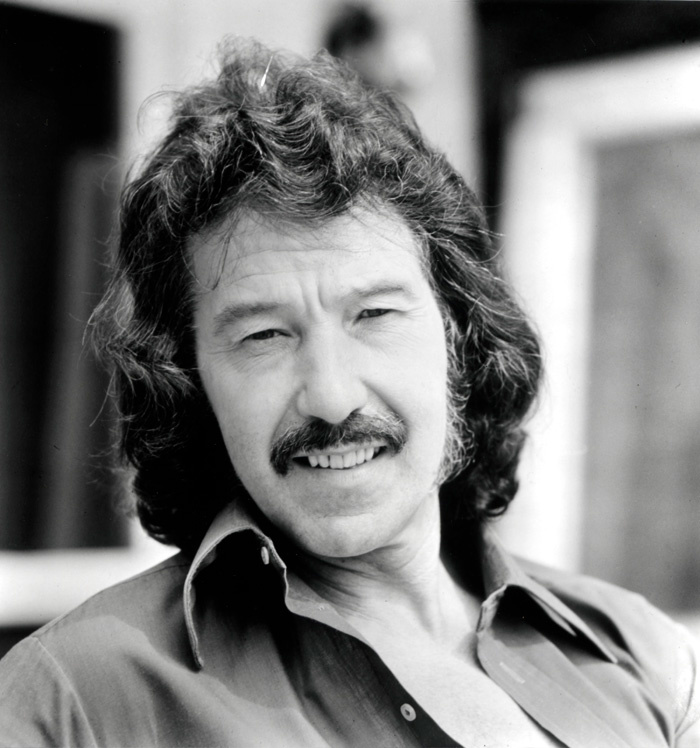
January 15, 1967
DENNIS WILSON: "'66 was a frightening time to be a rock musician. The Rolling Stones had come out with Could You Walk on the Water, and then America believed that John Lennon said the Beatles were bigger than Jesus Christ. Hell, we'd even had a song titled 'God Only Knows'. They may had been fighting religion, but the Beach Boys weren't trying to. At least, I don't think we did." (1996)
 |
| The original cover for Smile, designed by Frank Holmes. |
Trying once again to top the Beatles with
Abracadabra, Brian Wilson had declared that the Beach Boys' twelfth album was going to be called
Smile. It was touted as a teenage symphony to God and would contain a variety of genres including comedy sketches, classical music, folk, spirituality, and satire. It was a far more ambitious project than
Pet Sounds, but perhaps it may have been a far more daunting task than Wilson had predicted.
One of the proposed tracks for
Smile was "Good Vibrations", which was originally planned to appear on
Pet Sounds, but was instead dropped in favor of being a non-album single for October. The majority of the backing tracks had been finished by December 1966, but the rest of the band was baffled by Brian's ideas, and did not record their vocals. He had worked with Van Dyke Parks for the majority of the music, including lyrics. He had first met the senior Wilson brother back in 1965 through David Crosby and Terry Melcher[1].
The intended release date for
Smile was January 15, 1967 under Capitol Records. However, Brian had missed the deadline, and that incident would mark the beginning of not only the downfall of Brian Wilson, but the Beach Boys as well.
NICK GRILLO: "
Brian had a difficult time trying to explain his concept to the rest of the boys. In the studio, he would be seen curled into a ball telling us that there were 'too many bells' and told us to get rid of them. There were no bells as far as I knew, but I dismissed it as stress over missing the initial deadline. If I knew then what I know now, I could've done something to prevent his downfall." (2011)[2]
February - July 1967
 |
| The Beach Boys in the recording studio, 1967. |
Various incidents had taken place surrounding the
Smile recording sessions; Carl's arrest for draft evasion, clumsy editing processes, a lawsuit against Capitol Records demanding for over $250 thousand for royalty payments, as well as the threat in terminating their contract with Capitol, but most significant was the decline of Brian Wilson's mental health and creative dissatisfaction. Arguments within the group would eventually lead to Van Dyke Parks leaving the project in April. Still, Wilson refused to give up on
Smile until he'd made the album he intended to release.
But did he really know the album he wanted to make?
MIKE LOVE: "Everybody was thinking the same when it came down to Brian's vision of Smile. When asked, Carl [Wilson] had said that Smile was to have the theme of spirituality and spreading goodwill. He'd come up with a 'health' side, whatever the hell that was, but it seemed like he was overthinking it too much, especially after Rubber Soul." (2007)
And it only got worse with the performance of the Beatles at the Games for May concert with Pink Floyd, and the subsequent release of Merseyside two weeks after that. The concert had split opinions among rock music fans; some took it as an excuse to lie down and let their greats become greater, others claimed it was a call to arms. It was undeniably the latter for Brian Wilson; by now, he had become increasingly paranoid and deluded over his "rivalry" with the Liverpudlians, and the constant consumption of cannabis and smuggled candy bars did little to soothe his schizophrenic behavior.
AL JARDINE: "
One day, he'd say that a recording had too much guitar, and then another, he'd demand that the guitar be overdubbed. It was a nightmare, as if the album was cursed." (1987)
July 14, 1967
CARL WILSON: "
I knew that with Brian's sudden death, we were in trouble. We had an unfinished album on our hands, Capitol wasn't happy with our situation, and I was feeling scared. I told the others, 'We've fucking had it now.'" (1992)[3]
 |
| Brian Wilson shortly before his death at twenty-five, 1967. |
It was a day that would forever be a dark one in the Beach Boys' history. It was shortly after the last recording session that Brian Wilson had suffered from a heart attack. He was discovered by their manager Nick Grillo and was quickly rushed to the nearest hospital, but by then, it was already too late. The doctors' reports confirmed that the cause of his heart attack was excessive amounts of drugs, alcohol and stress. When the remaining Beach Boys received the news of their band mate's sudden death, they took the rest of the month off to prepare for Brian's funeral. His widow, Marilyn, was devastated by the news, even going so far as to accuse the Beatles for his death.
At the time of Brian's death, the majority of the recordings that would eventually form the final Smile album ranged from the initial February 1966 sessions with "Good Vibrations", all the way up to July 1967, half a year after the planned release! During the strenuous sessions, EMI and Capitol released "Then I Kissed Her", a previously released track from 1965, for a May single, despite the band's protests.
August 4 - September 22, 1967
EMI called the surviving Beach Boys for a meeting, stating that Smile had to be completed once and for all, even without Brian Wilson's input. The band agreed, and needed to find a producer; as far as they knew, the Beach Boys were finished.
NORMAN SMITH: "When I heard about the Beach Boys' situation, I sort of raised my hand and offered to help finish up Smile. I was working on Pink Floyd's second album, The Piper at the Gates of Dawn, but I still wanted to help the Beach Boys out of the jam they were in. Understandably, they were sort of uncomfortable with my presence, having worked with the Beatles before, but still, they appreciated that I came in. They were even impressed with my work with Pink Floyd." (1980)
 |
| Norman Smith, 1967. |
When new producer Norman Smith was brought in, he had been given a sheet of paper listing the potential songs for the final album. Taking a cue from George Martin, Smith decided to arrange the tracks in a "W"-shaped pattern; the best songs would be at the start and end of both sides ("Good Vibrations", "Cabin Essence", "Heroes and Villains", "Surf's Up"), whilst the weaker songs would be more towards the middle. In addition to the twelve songs on the list, he even included two new recordings, "With Me Tonight" and "Little Pad", and used an alternate version of "Good Vibrations" to differentiate it from the original 1966 single release.
MIKE LOVE: "It was so wrong, and yet it was so right at the same time." (2007)
AL JARDINE: "What Norman Smith did was take the biggest load of badly-recorded garbage with a cynical feeling to it ever, and he made something of it." (1967)[4]
The final mixes for Smile were done within a fortnight due to Smith needing to return to England and finish his work with Pink Floyd, and the master tapes were finally given to Capitol Records for a release date of September 22, 1967.
Released: September 22, 1967
Recorded: February 17, 1966 - July 14, 1967
Producer: Brian Wilson, Norman Smith
Track listing[5]
Side A
Good Vibrations
Do You Like Worms
I'm in Great Shape/Barnyard
With Me Tonight
Vega-Tables
Wonderful
Cabin Essence
Side B
Heroes and Villains
Child is the Father of the Man
The Old Master Painter
Wind Chimes
The Elements
Little Pad
Surf's Up
The definitive
Smile was met with mixed to negative reviews upon release, with some critics deriding it as "a cheapskate epitaph, a cardboard tombstone, a sad and tatty final note for Brian Wilson." John Lennon and Paul McCartney would defend the album in interviews, even stating that despite his bad situation, Brian was still able to give his audience some worthwhile music.
27 November 1967
Shortly following the release of
Smile, as well as a university tour with Rick Wright of Pink Floyd, the Beatles briefly returned to the studio to record an album covering the Beach Boys called
Tribute to Brian Wilson[6], released shortly after their single "Hello Goodbye"/"I Am the Walrus". Critics singled out Paul's vocal on "God Only Knows" as the best performance of the album.
The Beatles - Tribute to Brian Wilson
Released: 27 November 1967
Recorded: 26-30 October 1967
Producer: George Martin
Track listing
Side A
Wouldn't It Be Nice? [LM]
Vege-Tables [M]
I Get Around [LM]
Little Deuce Coupe [H]
Don't Talk (Put Your Head on My Shoulder [M]
Good Vibrations [LH]
California Girls [LM]
Side B
Heroes and Villains [S]
I Know There's an Answer [H]
Little Honda [L]
Surfer Girl [M]
I'm Waiting for the Day [L]
Help Me, Rhonda [H]
God Only Knows [M]
The message from the back cover is as follows:
"As you are very well aware, we have lost one of the brightest voices in pop music this year, one of the best songwriters the United States had to offer. Brian Wilson to us was not only an accomplished musician, songwriter and singer, but he was a friend - a dear friend whose works will never be forgotten. Ever since Surfin' came out in 1961, he and the Beach Boys have been making hit after hit, rivaling us even in 1964. Of course, Pet Sounds was the biggest inspiration for Merseyside, no secret, but we think his masterpiece, his swan song, will be Smile, a true treasure for the generation. But, as you know, he died of heart attack before the release of Smile... As a tribute, the Beatles have decided to record this album in tribute of Brian; all album sales will go to the Wilson family."
Eventually, time would prove kind to Smile. By its twenty-fifth anniversary in 1992, reviews became more positive, praising the songwriting and production, and even saying the Beach Boys went out on a high note. The one downside was that Brian Wilson never lived to see his final masterpiece be a critical success, but despite his early death at twenty-five, his legacy, as well as that of the Beach Boys, would live on forever.
Footnotes
- Terry Melcher was the producer for the Byrds.
- Nick Grillo was the Beach Boys' second manager following the dismissal of Murry Wilson, the father to Brian, Carl and Dennis.
- John Lennon said something similar concerning the fate of the Beatles after the death of Brian Epstein.
- John Lennon said something similar when defending Phil Spector's work on Let It Be.
- All tracks are taken from Smiley Smile and The Smile Sessions. "Good Vibrations", "Vega-Tables", "Wonderful", "Heroes and Villains", and "Wind Chimes" come from the former to add some variation, and to give an idea to what Norman Smith may have contributed.
- Tribute to Brian Wilson is the only album so far in the series that is completely fictional. The lead singers are listed in [brackets].
Author's Comments
Like the previous chapter, this chapter was originally written back in January 2018 and now it's very much the definitive version of my personal backstory for Smile. If you have a hard time accepting it, I don't blame you. Smile has become almost mythological in a sense, and despite the facts being laid out for all to read, they've been overshadowed by the hype for half a century. Your results as to how it might've sounded may vary.
As for why I chose to have Brian Wilson killed off? Well, if you think about it, the Beach Boys' post-Surf's Up albums ranged from mediocre to downright unlistenable, with That's Why God Made the Radio being a surprising comeback from them in 2012. Having him killed off in 1967 would mean that the Beach Boys end at their creative peak, a similar reason to how the Beatles broke up following Abbey Road (or, depending on how you view it, Let It Be) - only in their case, no one died until 1980.
On a similar tangent, I had Brian Epstein survive into 1968, but how will he handle the Beatles during their last few years? Well, those are chapters for later. I'd also like to point out that I'm establishing a rule for Strawberry Peppers; for every person whose life I spare, another one dies in their place - not on the same day that Person A died on, but around a similar period. Can't have too many people surviving now, can we?
My final comment here is that ever since hearing about Peter Tork's death last month, that got me thinking; what could I do for the Monkees in this timeline? From what I've read, they've plenty of material during the late 1960s that wasn't put out on the albums back then. I've also got similar plans for the Yardbirds and the Zombies, and you've got some ideas for what I could do with each band, that would be great. You might even have something that I never even thought up myself!