Showing posts with label London Calls for a Clash. Show all posts

Monday, November 1, 2021

Extra Scenes: "This is The Clash" (October 1985)

18 October 1985

The Clash - This is The Clash
Released: 18 October 1985
Recorded: January - March 1985
Producer: The Clash

Track listing[1]
Side A
Medicine Show
Cool Under Heat
E=MC²
The Bottom Line
Do It Now

Side B
This is England
Sudden Impact!
Three Card Trick
Electric Vandal
North and South
Life is Wild

MICK JONES: "Taking some time off and away from each other after we did Rat Patrol [from Fort Bragg] was a good thing for us when we got back to the studio in early 1985. Topper [Headon] had gotten into rehab for his heroin addiction, and during that break, I played with General Public, but I didn't stay with them for very long. I had to get back together with Joe [Strummer], Paul [Simonon] and Topper to see if we still gelled as a band." (2015)[2]

Freshly reinvigorated, the Clash went into Apple Studios in early 1985 to begin work on their first album since Rat Patrol from Fort Bragg. Joe Strummer wanted to encapsulate a back-to-basics approach to punk while Mick Jones wanted to add more dance elements into the music. This led to a few clashes between the pair, so to speak, but eventually, a compromise was found between them with a style that was closer to London Calling. Although still weary of Jones' use of synthesizers and sampling, Strummer admitted to still being proud of the work he and the others did with clear minds after nearly falling apart in 1982.

This is The Clash was released on 18 October 1985, being preceded by the first single "This is England"/"Sony" (#9 UK, #26) on 30 September. The follow-up single, "E=MC²"/"Sex Mad Roar" (#4 UK, #15 US), would be released 9 December. The album managed to reach #1 in the United Kingdom and #3 in the United States, with many calling it one of their greatest works to date, calling it a return to their roots while simultaneously maintaining a forward trajectory in their sound.

Although it looked as though the Clash would last longer having made a big comeback, it was sadly not to be, as the following year, they released their final album No. 10, Upping St.[3] before disbanding for good following one final tour in 1987. Mick Jones would go on to form Big Audio Dynamite, Paul Simonon with Havana 3am, and Joe Strummer with The Latino Rockabilly War. Fifteen years after the Clash's final show, Strummer would die of heart attack from an undiagnosed congenital heart defect at the age of fifty, putting an end to any chances of a Clash reunion.

Footnotes
  1. Most tracks are sourced from Cut the Crap and This is Big Audio Dynamite. "Do It Now" is sourced from Singles Box and "Electric Vandal" from the 2010 Legacy Edition of This is Big Audio Dynamite.
  2. In OTL, Topper Headon had been asked to leave the Clash prior to the release of Combat Rock as his heroin addiction was affecting his health and drumming. Terry Chimes, the band's original drummer in 1976 and 1977, was brought back as a replacement up until February 1983, when he was replaced by Pete Howard. As the Clash continued to tour, tension amongst the band grew, eventually culminating with Mick Jones being fired in September that same year, leading to him forming General Public, but he left during the recording of their first album. Nick Sheppard and Vince White were soon brought in as the Clash's new guitarists with Howard staying on as drummer. Most of this is avoided in TTL due to the band hearing of Ozzy Osbourne's death, although, as stated, Mick Jones still plays with General Public and leaves per OTL.
  3. Joe Strummer co-produced Big Audio Dynamite's No. 10, Upping St. with Mick Jones, even co-writing five songs (plus two bonus tracks) together. Some could argue that it was indeed the true last album by the Clash, even if it was just half of its members playing on it.
Author's Comments

Well, here it is; the final Extra Scene for the first draft of Strawberry Peppers. Out of the albums for this story, This is The Clash is the only one that's beyond the July 1985 cut-off date, but only by three months, even if the album was recorded before then. In a way, you can consider this to be a post-credits scene for the story, giving the Clash a proper conclusion to their career.

Monday, April 19, 2021

Chapter 71: Ashes to Ashes (April - September 1982)

23 April 1982

The Yardbirds - Axe Ivy
Released: 23 April 1982
Recorded: September 1981 - January 1982
Producer: Robert Plant and Jimmy Page

Track listing[1]
Side A
Burning Down One Side
Moonlight in Samosa
Pledge Pin
Fool in the Rain
Mystery Title

Side B
Worse Than Detroit
Fat Lip
Sea of Love
Swan Song

The Yardbirds' first album of the 1980s, the long-awaited follow up to In Through the Out Door, brought back the return to their rock roots with some rhythm and blues influence. Among them was a cover version of Phil Philips' 1959 hit "Sea of Love", which was released as a single shortly before the release of Axe Ivy, peaking at #3 in the United States. However, it did not chart as well in the United Kingdom, at a comparatively lowly #56. But even that didn't stop the album from topping the charts there (it stalled out at #2 in the United States, kept out of the top spot by Fleetwood Mac's Mirage).

JOHN BONHAM: "The album title Axe Ivy was a play on words; it was the Yardbirds' fourteenth album, and in Roman numerals, it's X-I-V [pronounced "acks"-"eye"-"vee"]. Get it? I came up with it myself; no one else had a good enough idea for the title, so it stuck." (2007)

Axe Ivy received generally positive reception from critics and fans, being regarded as a return to form for the Yardbirds, and the tour that followed up ensured that they would stick around for a long time and still hold their place in the rock and roll world.

14 May 1982

The Clash - Rat Patrol from Fort Bragg
Released: 14 May 1982
Recorded: 1980, September 1981 and November 1981 - January 1982
Producer: The Clash

Track listing[2]
Side A
Straight to Hell
Know Your Rights
Rock the Casbah
Red Angel Dragnet

Side B
Should I Stay or Should I Go
Ghetto Defendant
Sean Flynn

Side C
Car Jamming
The Beautiful People Are Ugly Too
Atom Tan
First Night Back in London

Side D
Inoculated City
Death is a Star
Cool Confusion
Idle in Kangaroo Court

For the past few years, the Clash was one of Apple's most successful punk rock groups, and proved to critics and listeners that they were willing to put anything in their music. Even the most stupid-sounding shit, they turned to gold. But by the end of 1981, the cracks in their relationship were beginning to show.

JOE STRUMMER: "We were basically in two camps by that point; me and Paul [Simonon] on wanting to return to our more punk roots, and Mick [Jones] and Topper [Headon] wanting to continue evolving our sound. It didn't help that Topper was in the midst of a drug addiction." (1997)

MICK JONES: "I was unhappy; I felt estranged from the rest of the group and I was living with Ellen [Foley; his then-girlfriend] in New York. I thought, 'This must have been how Paul McCartney felt when he felt estranged from John, George and Ringo in the early 70s.' It felt like lightning was about to strike twice at Apple Records." (2009)

The Clash in Philadelphia, 1982.
Between January and March, the Clash embarked on their Far East Tour in Japan, Australia, New Zealand, Hong Kong and Thailand. Shortly afterward, they returned to London to listen to the music recorded in New York and decide what to do with the material. In the middle of arguing over how their next album should sound, they heard the news of a tragedy from the other side of the pond.

PAUL SOLOMON: "One of us caught a newspaper article saying that Ozzy Osbourne had choked on his own vomit. What really got to all of us was what Randy Rhoads said concerning his final words to Ozzy. 'You'll kill yourself, you know? One of these days.' It was very damning to read, and that made us realize that one of us could drop dead and we'd live the regret of never making up with him before then. We felt closer as a group, realizing that if we were to stay together, we'd have to cut the crap and make the album that all of us wanted to put out. And after that, we'd take a break for a while." (2007)

Rat Patrol from Fort Bragg came out that May, backed by singles "Know Your Rights" (#30 UK), "Rock the Casbah" (#14 UK, #5 US) and the double A-side, "Should I Stay or Should I Go"/"Straight to Hell" (#10 UK, #37 US), respectively released 23 April, 11 June and 17 September. The album topped the charts in the United Kingdom and peaked at #4 in the United States, becoming the Clash's best selling album to date. As the band was taking a hiatus to sort out their differences and drug problems, it would be a while before the world heard from them again.

Meanwhile, the original album art depicting the execution of Viet Cong member Nguyễn Văn Lém in 1968, photographed by Eddie Adams, sparked controversy due to insensitivity despite that it expressed the direct lyrical references to the Vietnam War and the notion of "urban warfare" that were prominent in the album. In wake of the controversy, the cover was replaced by a band photo.

25 June 1982

Fleetwood Mac - Mirage
Released: 25 June 1982
Recorded: November 1981 - March 1982
Producer: Fleetwood Mac, Richard Dashut and Ken Caillat

Track listing[3]
Side A
Love in Store
Dirty Creature
That's Alright
Log Cabin Fever
Gypsy
Only Over You

Side B
Take a Walk
Straight Back
Put a Candle in the Window
If You Were My Love
Hello Sandy Allen
Wish You Were Here

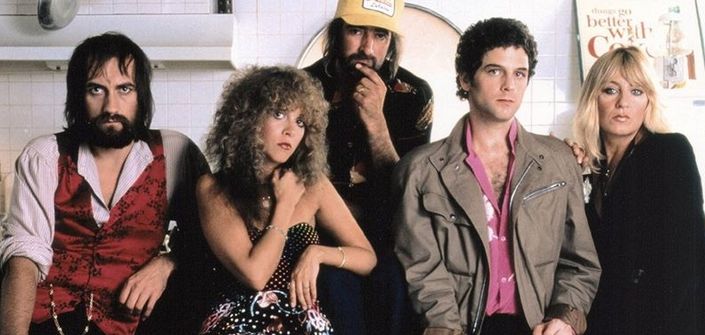
Fleetwood Mac's first album since 1977's Rumours had come out the week following Crosby, Stills & Nash's Daylight Again under Apple Records, and it was their first to feature Neil Finn as guitarist and vocalist. Mirage carried on with the band's soft rock sound from Rumours and topped the charts in the United States for five weeks, and topped out at #3 in the United Kingdom. Finn's "Dirty Creature", Stevie Nicks' "Gypsy" and Christine McVie's "Love in Store" were all Top 20 hits in the United States.

MICK FLEETWOOD: "It was just before Mirage came out when Lindsey reached out to me and John a few days after Ozzy Osbourne was declared dead from excessive drinking. I could see that he clearly regretted his behavior following the aborted Tusk sessions, and it seemed as if a few years away from us had given him a lot of time to work on his behavior." (1998)

STEVIE NICKS: "Christine and I were reluctant to let him back into the band - Neil didn't have an opinion on the matter, for he stayed to the sides to see what would unfold. Lindsey had hurt Christine the most, and she was afraid of being in the same recording studio as him, just in case he had another meltdown. But still, we gave Lindsey the benefit of the doubt and let him join us for our short American tour." (2014)

Fleetwood Mac, 1982. Not pictured: Neil Finn.
Lindsey Buckingham's return to Fleetwood Mac for their Mirage Tour (September 1 - October 31) also coincided with the band headlining the first US Festival in San Bernardino on September 5, for which they were paid half a million dollars. Among other artists during September 3-5 included the Ramones, Talking Heads, Dave Edmunds, the Cars, Pat Benatar and Tom Petty & Mudcrutch, some of whom were under Apple Records or its two subsidiaries, Highway 61 or Swan Song.[4]

The tour was met with a few hiccups, but fortunately, none were connected to band relations. On October 5, Stevie Nicks' best friend, Robin Anderson, had died from leukemia at the age of 34, following a pregnancy leading to a premature birth to a baby boy, Matthew - thankfully, he survived. After the death of Robin, Nicks would give off some of her most electrifying, heartfelt performances as a tribute to her fallen friend, later impulsively marrying her widower Kim Anderson in 1983, thinking that it would be best for Matthew. Sadly, Stevie and Kim would separate after only three months, and divorce by 1984.

Around the time of Robin's death, two shows were postponed when Nicks suffered from walking pneumonia, but soon recovered. The October 22 show at The Forum in Inglewood was filmed and later released under the title Fleetwood Mac In Concert - Mirage Tour '82 under Apple Films. Lindsey Buckingham would remember that for just about every show, it felt as though he had never left to begin with, finally being integrated back into the band. When asked what Fleetwood Mac's plans for the future were, he said, "Who knows? We might do another album. Hopefully it won't take five years to put out!"

Summary of Fleetwood Mac releases, 1982
  • "Dirty Creature"  / "That's Alright" - 11 June 1982 (#85 UK, #14 US)
  • Mirage - 25 June 1982 (#3 UK, #1 US)
  • "Gypsy" / "Cool Water" - 4 September 1982 (#34 UK, #7 US)
  • "Love in Store" / "Take a Walk" - 18 October 1982 (#10 US)
  • "Hello Sandy Allen" / "Only Over You" - 12 December 1982 (#71 UK)

4 September 1982

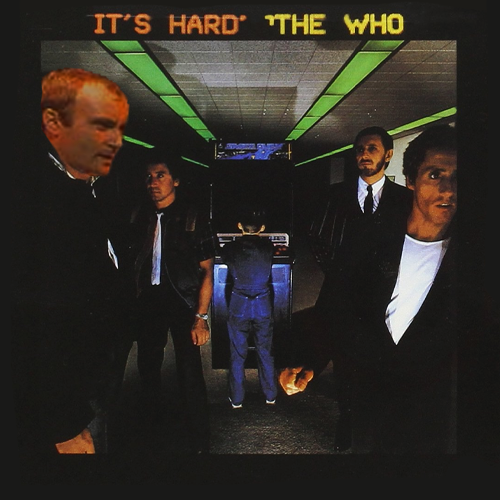
The Who - It's Hard
Released: 4 September 1982
Recorded: June 1982
Producer: Glyn Johns

Track listing[5]
Side A
Athena
It's Your Turn
Cooks County
It's Hard
Dangerous
Eminence Front

Side B
I've Known No War
One Life's Enough
One at a Time
Why Did I Fall for That
Man on the Corner
Cry If You Want

The Who's second post-Keith Moon album, It's Hard (#11 UK, #8 US), received polarizing reviews from critics. Some praised it and even considered it a spiritual sequel to Lifehouse from a decade prior, while others condemned the album, some even going so far as to say Phil Collins had "ruined" the Who. Having a solo career alongside his position as their drummer likely didn't help the hostility towards Collins either. "Athena" backed with the non-album B-side "A Man is a Man" was released as a single at the same time as It's Hard, reaching #40 in the United Kingdom and #28 in the United States. Neither of the follow up singles - "Eminence Front" (25 December 1982) and "It's Hard" (February 1983) - reached the Top 40 in either country.

PHIL COLLINS: "It was a pretty miserable time to be a part of the Who; Pete [Townshend] was depressed, often under heroin and constantly fighting with Roger [Daltrey] and John [Entwistle] over what to play on stage. I just sat there and let everything unfold. I almost regretted leaving Genesis in the first place, wondering what might have happened had I decided to stay with them." (2002)

The Who would embark on a farewell tour in North America with the Yardbirds as support, with the final show taking place on December 17 in Toronto, Canada.[6] Pete Townshend would spend part of 1983 writing new material for a potential follow-up to It's Hard, but was unable to come up with music that would be good enough for the Who to record, and so on 16 December 1983, he announced his departure from the Who, which ended the band for good. This left Phil Collins free to focus on his solo career for the remainder of the 1980s, although he would still play with them for live performances up until 1989.[7]

Footnotes
  1. "Fool in the Right" is sourced from In Through the Out Door, "Sea of Love" from The Honeydrippers: Volume One, and "Swan Song" is "Midnight Moonlight" from The Firm. The remaining tracks all come from Robert Plant's solo album Pictures at Eleven.
  2. Track listing is based upon what Mick Jones proposed for Rat Patrol from Fort Bragg before it was pruned down to become Combat Rock. The four outtakes ("The Beautiful People Are Ugly Too", "First Night Back in London", "Cool Confusion", "Idle in Kangaroo Court") can be found on the 2013 box set Sound System.
  3. Neil Finn's tracks ("Dirty Creature", "Log Cabin Fever", "Take a Walk", "Hello Sandy Allen") are all taken from Time and Tide, due to Split Enz breaking up earlier than in OTL. The remaining tracks are sourced from OTL's Mirage, with "Put a Candle in the Window" and "If You Were My Love" being outtakes from the same sessions, found on the 2016 deluxe edition. The latter track was eventually re-recorded for Stevie Nicks' 24 Karat Gold: Songs from the Vault in 2014.
  4. This actually happened in OTL, except it was during Lindsey Buckingham's final tour with Fleetwood Mac until 1997.
  5. "Man on the Corner" is sourced from Genesis' Abacab, taking the place of "A Man is a Man". Otherwise, It's Hard follows the exact same track listing as OTL. In addition, Roger Daltrey takes lead vocals on "Man on the Corner" while Phil Collins sings co-lead on "Cooks County" instead of Pete Townshend.
  6. In OTL, the Clash went on tour with the Who; because of the former taking a hiatus by that point, the Yardbirds take their place instead.
  7. In OTL, Kenney Jones played with the Who for one-off performances at Live Aid in 1985 and at the BPI Awards Ceremony in 1988, as well as their 25th anniversary tour in 1989. He was not, however, invited for their performance at the Rock and Roll Hall of Fame Induction Ceremony in 1990, and in 1996, Zak Starkey became the Who's new touring drummer starting with their Quadrophenia Tour. With Phil Collins on board, all of this will happen.
Author's Comments

Not much to comment on here; a fair number of storylines are coming to close. The Yardbirds' 1980s discography will draw parallels to Robert Plant's (I mean, he is the lead singer of Led Zeppelin, after all), and those of the Clash and Fleetwood Mac will be revisited once more in 1985 in universe. The Who's storyline is just about finished barring their appearance at Live Aid, which I'm sure most of you can predict, but we will hear from Phil Collins once more in 1985.

Monday, March 22, 2021

Chapter 69: We Got the Beat (May - December 1981)

15 May 1981

The Clash - Sandinista!
Released: 15 May 1981
Recorded: February - August 1980
Producer: The Clash and Mikey Dread

Track listing[1]
Side A
The Magnificent Seven
Police on My Back
The Leader
Charlie Don't Surf
The Call Up
Somebody Got Murdered

Side B
Rebel Waltz
Let's Go Crazy
Junkie Slip
Up in Heaven (Not Only Here)
Washington Bullets
Broadway

The Clash's fifth album, Sandinista!, was the sister album to last year's Something About England, recorded during the same sessions as the 1980 album. In contrast to England's wildly experimental tone and various guest musicians, Sandinista! was seen as a bit more traditional. It topped out at #3 in the United Kingdom and #5 in the United States and was preceded on 10 April with "The Call Up"/"Stop the World" (#33 UK). The follow-up single, "The Magnificent Seven"/"Radio One" (#20 UK, #17 US), was released 19 June. The only other release by the Clash in 1981 was the non-album single "This is Radio Clash"/"Radio Clash" (#38 UK, #14 US), released 20 November. At the moment, they were working on their sixth studio album, due for release next year.

10 July 1981

Electric Light Orchestra - Time
Released: 10 July 1981
Recorded: Early 1981
Producer: Jeff Lynne

Track listing[2]
Side A
Twilight (Prologue)
Yours Truly, 2095
Ticket to the Moon
When Time Stood Still
The Way Life's Meant to Be
Julie Don't Live Here
Another Heart Breaks

Side B
Rain is Falling
From the End of the World
Lights Go Down
Here is the News
21st Century Man
Hold on Tight
The Bouncer (Epilogue)

The Electric Light Orchestra's first official studio album of the 1980s centered around a man from 1981 who finds himself in the year 2095 where he is confronted by the dichotomy between advanced technology and longing for a long dead romance. Time briefly hit #1 in the United Kingdom for two weeks in the midst of the Beatles' big reunion with Quadruple Fantasy, while in the United States, it topped out at #10. Reviews ranged from mixed to positive.

Unlike ELO's usual orchestral sound, Jeff Lynne chose to focus on electronics, hence the use of synthesizers to give the album a futuristic sound. It became the second album to not involve Mik Kaminski (violin), Hugh McDowell and Melvyn Gale (cello), all of whom had not partaken on Discovery or the songs featured in Xanadu. The core for ELO had now been reduced to Lynne himself, drummer Bev Bevan, pianist Richard Tandy and bassist Kelly Groucutt, although Mik Kaminski would rejoin for the tour supporting Time, lasting from September 1981 to March 1982.

Summary of single releases from Electric Light Orchestra's Time
  • "Hold On Tight" / "When Time Stood Still" - 17 July 1981 (#2 UK, #4 US)
  • "Twilight" / "Julie Don't Live Here" - 10 October 1981 (#9 UK, #15 US)
  • "Ticket to the Moon" / "Here Is the News" - 11 December 1981 (#17 UK)
  • "Rain Is Falling" / "The Way Life's Meant to Be" - 15 January 1982 (#86 US)

August 28, 1981
Elizabeth Peña, the first actress to portray Wonder Woman on the big screen, 1980s. Her performance earned her an Academy Award nomination for Best Actress in 1982.
Following the success of the first Superman movie directed by Richard Donner and starring Christopher Reeve as the titular hero, plans were being made to produce other films starring other DC superheroes under a single banner that would be labeled by fans the Appleverse. A film featuring John Travolta as Batman and directed by Martin Scorsese was intended to become the third entry, but due to various rewriting going around along with work on a planned sequel, Wonder Woman - starring Elizabeth Peña as the titular heroine, Raquel Welch as her mother Hippolyta, John Schneider (The Dukes of Hazzard) as love interest Steve Trevor, and for the villains, Sigourney Weaver (Alien) as Baroness Paula von Gunther and Ian McKellen as Ares, god of war - ended up becoming the third entry in the Appleverse instead, and was released to critical acclaim. Wonder Woman was directed by Ivan Reitman and the script was co-written with Tom Mankiewicz[3], with the score by James Newton Howard. Pat Benatar's "Hit Me With Your Best Shot" also played during the end credits.

Set in the early to mid-1940s, during World War II, United States army pilot Steve Trevor lands himself in Paradise Island[4], a segregated land of women, and meets one of its residents, Diana, the daughter of Queen Hippolyta. After explaining that the world of man is under war, Steve brings Diana to the world outside of Paradise Island, the latter believing that the god of war Ares is responsible for the cause of the war. Along the way, Diana encounters Baroness Paula von Gunther, a cold-blooded Nazi spy for Hitler, who pretends to ally with her and Steve so she can kill them; unknown to everyone, however, she is a pawn in Ares' game to exterminate Diana, who is later revealed to be the daughter of Zeus and Hippolyta. In the end, the Baroness and Ares are killed, and the war comes to an end following the collapse of Nazi Germany. In the present day (1980, according to the film), Diana reunites with an elderly Steve Trevor, and they see a bat-shaped signal in the sky, with Diana going off to see what it could mean.

November 10, 1981

Kiss - Music from "The Elder"
Released: November 10, 1981
Recorded: March - September 1981
Producer: Bob Ezrin

Track listing[5]
Side A
Fanfare
Just a Boy
Odyssey
Only You
Under the Rose
Dark Light

Side B
A World Without Heroes
The Oath
Mr. Blackwell
Escape from the Island
I (Finale)

Things had changed drastically for Kiss at the turn of the decade. Their 1979 album Dynasty sold fairly well, backed by the hit single "I Was Made for Lovin' You", although their 1980 follow-up, Unmasked, did not do as well commercially or critically. For Paul Stanley, Gene Simmons, Ace Frehley and Eric Carr (Peter Criss, the original drummer, had left the band in May with Carr taking over three months later), this next album would either salvage Kiss as a commercial force, or they would implode on themselves.

ACE FREHLEY: "It was an in-between; Kiss didn't really fall apart, but they didn't quite bounce back either. Peter had left, Eric came in, and Paul and Gene had taken over the band by that point. I felt like a man out of place by that point." (1996)

Music from "The Elder" was a concept album, fronted mainly by Stanley and Simmons, and there were hopes that it'd bring the band back to their roots. Bringing in producer Bob Ezrin, having co-produced Roger Waters' The Wall the year prior, they also included medieval horns, strings, harps and synthesizers, making it sound more like progressive rock rather than hard rock. Frehley was constantly frustrated during the sessions, feeling that his voice (and guitar) wasn't being heard during voting decisions.

The lineup for Kiss, 1981. Eric Carr replaced Peter Criss, going by the persona, The Fox. He would remain the band's drummer from that point on, save for reunions with Criss in the late 1990s and early 2000s.
The story of "The Elder" was that a young boy had been recruited by the Council of Elders belonging to the Order of the Rose, an unknown group whose main goal was to combat evil. Elderly caretaker Morpheus guides the boy on his journey, whose feelings are described in the album's lyrics, overcoming his initial doubts and finally getting ready to undertake his odyssey. Spoken dialogue was included in between the songs to provide exposition and further clarify the story.

GENE SIMMONS: "People were pretty divided about "The Elder"; some loved it, some hated it, and some were very mixed, feeling like it wasn't any better or worse than Unmasked." (2011)

Music from "The Elder" peaked out at #75 in the United States compared to Unmasked's #35, while in the United Kingdom, the former reached #51. Critical reaction was overall divisive, and the album's sole lead single released November 17, "A World Without Heroes" (#55 UK, #56 US), got lost in the crowd. By the end of February 1982, Music from "The Elder" was all but forgotten about, and Ace Frehley, arguably the most beloved member of Kiss, would leave following the release of next year's Creatures of the Night, leaving half of the founding lineup intact. In Ace's place was Vinnie Vincent, formerly of Black Satin and the Hitchhikers, who had partaken in the recording of Creatures of the Night. Once again, personality clashes would rise between the members...

18 December 1981

Lindsey Buckingham - Tusk
Released: 18 December 1981
Recorded: Winter 1980 - Summer 1981
Producer: Lindsey Buckingham, Richard Dashut and Ken Caillat

Track listing[6]
Side A
Suma's Walk
The Ledge
Save Me a Place
What Makes You Think You're the One
Book of Love
That's All for Everyone
Not That Funny

Side B
Empire State
That's Enough for Me
Oh Diane
I Know I'm Not Wrong
Goodbye Angel
Tusk
Eyes of the World

Throughout the winter of 1980 all the way up to the summer of 1981, Lindsey Buckingham was kept incredibly busy following his isolation from Fleetwood Mac. In fact, with producer Richard Dashut, he had recorded enough material for a double album, but it was decided to release two individual albums instead.

The first of these, Tusk, consisted of Buckingham's material from the failed 1979 Fleetwood Mac album as well as new material. Tusk reached #3 in the United Kingdom and #8 in the United States and received positive reviews. The title track was released as a single with "Not That Funny" (#6 UK, #8 US) in November 1981, while the following single, "Oh Diane" / "Teen Beat" (#9 UK, #35 US), would come out in February 1982.

The follow-up album, Law and Order, while recorded during the same sessions, would be released in November 1982.[7] In between solo album releases, Buckingham would find himself mending fences with his former bandmates.

Footnotes
  1. All tracks are sourced from OTL's Sandinista!.
  2. All tracks are sourced from OTL's Time. In addition, the track listing is based upon the original double album track listing, although "When Time Stood Still" and "The Way Life's Meant to Be" have swapped positions, and "The Bouncer" is moved towards the end, being combined with "Epilogue". Likewise, "Prologue" and "Twilight" are combined into a single track. "Sad Affair" and "Time Transporter" currently remain unreleased.
  3. In OTL, Ivan Reitman was attached to direct a Batman film written by Tom Mankiewicz, starring Bill Murray as Batman, David Niven as Alfred, William Holden as Commissioner Gordon, and David Bowie as the Joker. Reitman later left the project following the deaths of Holden and Niven as well as various rewrites to the script; Joe Dante then entered the project, but the film was cancelled altogether. In the mid-1990s, Reitman was attached to direct a Wonder Woman film, but that too never saw the light of day.
  4. Paradise Island (sometimes called the Amazon Isles) was the original name to Themyscira, Wonder Woman's home island. The current name of Themyscira was given in the first issue of Wonder Woman Vol. 2 in February 1987, and it originated from an ancient Greek town in northeastern Anatolia. According to Greek mythology, it was the capital city for the Amazons.
  5. The track listing is based upon the intended order; when Music from "The Elder" was first released, the order was rearranged so both sides would start with the songs that Casablanca Records wanted to be singles, explaining why the story on the American edition made no sense. The 1997 reinstates the songs in the proper order.
  6. Tracks are sourced from The Alternate Tusk and outtakes and early versions from Mirage.
  7. In OTL, Lindsey Buckingham's Law and Order was released on October 3, 1981, the month before Fleetwood Mac started recording for Mirage.
Author's Comments

Man, this chapter took longer to write up than I was expecting; the stories for Something About England, Time and Tusk both came out fine (although the album cover to the latter did leave a bit to be desired; then again, I've made far worse), but it was the Kiss and Wonder Woman parts of this chapter that kept it from being finished earlier. I had little to no idea what to do with either of them, the latter more so as coming up with fictional movies and their plotlines, cast and crews is difficult, as I soon found out. I wanted to utilize actors who were well known or just starting out during that time, just to keep things as authentic as possible. Hopefully it all came out okay.

I promise that the next chapter will be better and won't come off as a bit half-baked, especially since it'll be the 70th of the story.

Monday, November 23, 2020

Chapter 64: Love Will Tear Us Apart (May - November 1980)

23 May 1980

The Rolling Stones - Emotional Rescue
Released: 23 May 1980
Recorded: 22 January - 19 October 1979
Producer: The Glimmer Twins

Track listing[1]
Side A
Dance (Part 1)
Summer Romance
Send It to Me
Little T&A
Indian Girl

Side B
Where the Boys Go
F.U.C. Her
Emotional Rescue
No Use in Crying
All About You

Keith Richards had been exonerated from a drug charge in Toronto, Canada that could have landed him in prison for years. In between, the Rolling Stones had been able to complete Give Us Some Neck for a 1979 release, and they had just put out their first album for the 1980s. Reportedly, about twenty songs had been recorded for Emotional Rescue, but only ten were chosen for release, with the rest being left aside for next year. The album reached #1 in both the United Kingdom and the United States, with the title track being released with "F.U.C. Her" on the same day as a single (#9 UK, #3 US). "All About You" / "Send It to Me" (#33 UK, #26 US) would later be released on 25 August that same year.

Later that September, former Rolling Stones member David Bowie would put out his second post-Stones album Scary Monsters (and Super Creeps), which also hit #1 in the United Kingdom and topped out at #5 in the United States. It would be three years before he would put out his next album.

July 11, 1980

Crosby, Stills & Nash - Thoroughfare Gap
Released: July 11, 1980
Recorded: June 1978 - February 1980
Producer: Crosby, Stills & Nash

Track listing[2]
Side A
Drive My Car (Needed to Ride)
Tomorrow is Another Day
Barrel of Pain (Half-Life)
Thoroughfare Gap
Out on the Island

Side B
Feel Your Love (Tears in the Light)
Love Has Come
Distances
Helicopter Song
Dear Mr. Fantasy

GRAHAM NASH: "We were all feeling like hell by the time we'd finally put out Thoroughfare Gap. Neil had left to pursue a full-time solo career, David was on the coke, and Stephen and I tried finishing up solo albums, but they went nowhere. The few songs that we did end up salvaging for CSN ended up on the album." (2016)

The title track to Crosby, Stills & Nash's first album without Neil Young since 1969 had originally been written back in 1972 for the first Manassas album, but after several attempts at recording it, the effort was abandoned as they couldn't get the right take. Six years later, it had been brought back and re-recorded for the first CSN album of the 1980s. Originally intended for a Christmas 1978 release, Thoroughfare Gap was consistently delayed until July 1980, having been recorded sporadically between June 1978 and February 1980.

A big factor in the album's delay was David Crosby himself, who was constantly under the influence of cocaine and barely contributing any songwriting material himself. This would result in a near-death experience before he ended up in prison and rehab years later. By the time Thoroughfare Gap was released, the music scene had changed a lot, especially in the UK, where the album and its three singles got lost in the shuffle in the midst of new wave and punk groups. The 80s were going to be a long decade for Crosby, Stills & Nash.

Summary of Crosby, Stills & Nash releases, 1980
  • "Thoroughfare Gap" / "Distances" - May 22, 1980 (#15 US, #57 UK)
  • Thoroughfare Gap - July 11, 1980 (#10 US, #44 UK)
  • "Out of the Island" / "Feel Your Love (Tears in the Light)" - July 14, 1980 (#22 US, #89 UK)
  • "Drive My Car (Needed to Ride)" / "Helicopter Song" - October 20, 1980 (#47 US)

18 August 1980

Yes - Song of Seven
Released: 18 August 1980
Recorded: November 1979, April - June 1980
Producer: Yes and Trevor Horn

Track listing[3]
Side A
Everybody's Song
Some Are Born
I Hear You Now
Countryside
Machine Messiah

Side B
Days
Into the Lens
High
White Car
Song of Seven

In 1977, Yes had put out Going for the One which had received a mostly positive reception from critics, citing it as a return to more accessible music, even reaching #1 in the United Kingdom for two weeks. However, the follow-up album from 1978, Tormato, was not as well-received despite hitting the Top 10 in both the United Kingdom and the United States. Despite intending to put out the album in two parts, it was released as a single album instead. Yes would go on tour lasting all the way up to June 1979, and afterward, the band would take a short hiatus.

JON ANDERSON: "In between the last show of the tour and reconvening that November to start work on the follow-up in Paris, I recorded a few improvised songs with Vangelis. It was all very spontaneous and we had a lot of fun with them, and I thought about asking him to be part of Yes. We didn't release them due to being on different labels at the time, but I kept them on the back of my mind when we reconvened in November." (2004)

Despite bringing in Roy Thomas Baker as their producer, conflict among the members of Yes were taking place; Chris Squire, Alan White and Steve Howe all wanted a heavier sound, while Jon Anderson and Rick Wakeman wanted a lighter, folk-oriented sound. Enough songs for an album were recorded, but nobody could agree on what to do with them, and the sessions came to an abrupt halt after White broke his foot while roller-skating. Tensions were so great that Wakeman ended up leaving the group altogether, and he almost took Anderson with him. What was Yes going to do?

STEVE HOWE: "Rick just went said to me, Chris and Alan that he wasn't taking our crap anymore, and he just up and left us. Jon almost wanted to leave as well, but he was conflicted. He went to live with Vangelis for a few days, told him about what was going on, and even invited him to a session. We regrouped without Rick but with Vangelis, and we came up with an agreement to make an album of contrasts. But we needed a producer after Roy left the project." (1997)

Geoff Downes and Trevor Horn, the Buggles, 1979.
CHRIS SQUIRE: "At the time, we were being managed by Brian Lane, who was also manager for the Buggles, who were signed onto Swan Song Records. He presented to us with their new hit single, 'Video Killed the Radio Star', and we were pretty blown away by it. Trevor Horn's voice almost reminded us of Jon in a way. We invited Trevor to the sessions, and presented some ideas we add for the follow-up to Tormato." (2000)

The Buggles were a new wave consisting of Geoff Downes and Trevor Horn, formed in 1977 and joined Swan Song Records in 1978. They were enjoying commercial success from their debut album The Age of Plastic, backed with its lead single "Video Killed the Radio Star". After several meetings with Brian Lane, manager for both the Buggles and Yes, the latter band was able to transfer from Atlantic Records and onto Swan Song Records. It was the beginning of a new era for Yes, now with Vangelis on keyboards and Trevor Horn as co-vocalist.

ALAN WHITE: "It really felt like we had been through a rebirth after those Paris sessions; having Trevor and Vangelis on board certainly kept conflict to a minimum. At first, we didn't know what to call the album, but then Jon came up with a track that served not only as the title for the album, but also the finale for the album." (2005)

Song of Seven marked the first album by Yes released under Swan Song Records, comprised of the best tracks not only from the initial Paris sessions, but also new tracks with Trevor Horn as co-producer, as well as a reworking of one of the tracks Jon Anderson and Vangelis recorded together, "I Hear You Now" (#5 UK, #43 US), which was a Top 10 hit in the United Kingdom. The album briefly hit #1 for a week in the United Kingdom, and topped out at #14 in the United States to generally positive reception.

7 November 1980

The Clash - Something About England
Released: 7 November 1980
Recorded: February - August 1980
Producer: Mikey Dread and The Clash

Track listing[4]
Side A
Lightning Strikes (Not Once but Twice)
Version City
Look Here
The Crooked Beat
Ivan Meets G.I. Joe
One More Time
Something About England

Side B
Corner Soul
Junco Partner
If Music Could Talk
The Sound of Sinners
Midnight Log
The Equalizer
The Street Parade

By the end of the 1970s, The Clash were one of Apple's biggest punk rock acts, having achieved success with their eponymous debut album from 1977, followed by Give 'Em Enough Rope and London Calling, the latter of which was regarded as their greatest album, as well as one of the greatest albums of all time. So where were they going to go from there? After all, London Calling was a double album, so surely they would try and top that with a triple album, right?

JOE STRUMMER: "We decided upon a triple album at first, having recorded a shit-ton of music. But going through the material with Mikey [Dread, co-producer], we realized that we might have gone overboard with it." (1995)

MICK JONES: "I dunno whose idea it was, but we ended up deciding to spread the material we'd recorded over two albums to make it more digestible to the public. That meant some tracks ended up on the cutting room floor, probably rusting away in some tin in the vaults at Apple, but hey - somehow, it worked out for us and the public." (2007)

Something About England (#8 UK, #13 US), the Clash's fourth album, covered a wide variety of musical styles such reggae, rockabilly, jazz, R&B, and what would later be called hip-hop. The album was initially met with some confusion among critics and fans, but it did go on to win some polls in 1981. It was backed with the non-album single "Hitsville UK"/"Kingston Advice" (#22 UK, #19 US) on 12 December, the A-side featuring Ellen Foley on co-lead vocals. But what about the material that had been left to the side? It would be six months before it was released as Sandinista!, featuring the less experimental music from the sessions, though it would still be regarded as the sister album to Something About England.

Footnotes
  1. All tracks are sourced from OTL's Emotional Rescue, excluding "Little T&A" and "No Use in Crying" from Tattoo You and "F.U.C. Her" from Ronnie Wood's Gimme Some Neck.
  2. Tracks are sourced from disc four of the CSN box set, Daylight Again, Stephen Stills' Thoroughfare Gap, Graham Nash's Earth & Sky and David Crosby's Oh Yes I Can.
  3. Tracks are sourced from Jon Anderson's Song of Seven, Jon and Vangelis' Short Stories, Drama and bonus tracks from Tormato. "Everybody's Song" was later reworked into "Does It Really Happen?" for Drama, "Countryside" into "Corkscrew" for Steve Howe's 1991 solo album Turbulence, and "High" to become "Sketches in the Sun" for GTR's debut album, featuring Steve Hackett (Genesis) and Howe (Yes, Asia). "Some Are Born" and "Days" were auditioned by Yes, but later re-worked by Anderson for Song of Seven.
  4. All tracks are sourced from Sandinista!. The tracks included feature various members that the Clash worked with on the OTL album such as Mikey Dread, Gary Barnacle and his father Bill (real name Arthur), Tymon Dogg, Davey Payne, Rick Gascoigne, Bill Barnacle and Lew Lewis.
Author's Comments

Not much to say about the Rolling Stones or Crosby, Stills & Nash; we're not going to be seeing much of them for the remainder of Phase Three, though I will say that the Stones could either have an improved 80s for them, or they take a hiatus during that decade. Yes, on the other hand, was more difficult to figure out, especially with keeping Jon Anderson from leaving to pursue a solo career. What I've came up with was probably not my best work, but hopefully it came out okay.

I wasn't originally going to make Something About England, but after reading a bit about Sandinista!, I thought, what if the Clash had put out two single albums instead of a triple album? How I arranged the two albums (the other will come out next year) was by focusing on those that featured the likes of Mikey Dread and Tymon Dogg, some of which overlap on some songs, and then go from there. Here's a list as to who appeared on which tracks:
  1. Lightning Strikes (Not Once but Twice) - Tymon Dogg
  2. Version City - Lew Lewis
  3. Look Here - Lewis, Mikey Dread
  4. The Crooked Beat - Davey Payne, Gary Barnacle, Dread
  5. Ivan Meets G.I. Joe - Payne, Rick Gascoigne, G. Barnacle, Bill Barnacle
  6. One More Time - Dread
  7. Something About England - Dogg, Payne, Gascoigne, G. Barnacle, B. Barnacle
  8. Corner Soul - Lewis
  9. Junco Partner - Dogg, Lewis
  10. If Music Could Talk - Payne
  11. The Sound of Sinners - Dogg
  12. Midnight Log - Lewis
  13. The Equalizer - Dogg, Lewis
  14. The Street Parade - Gascoigne, G. Barnacle, B. Barnacle
There was also "Lose This Skin" that featured Dogg, Payne, Gascoigne and the Barnacles, but I left it off because it featured Tymon Dogg on lead vocals, which automatically disqualified it in my books. I also excluded any dub versions of songs ("One More Dub", all of side six barring "Version City") to avoid repetition, as well as "Mensforth Hill" ("Something About England" but backwards and with overdubs), which narrowed the song list down to just twenty-eight. Fourteen ended up on Something About England, along with "Hitsville UK" and "Kingston Advice" being released as a non-album single. That means the remaining twelve songs will end up on the revised Sandinista!, so nothing ends up being lost. (Except maybe "Lose This Skin", but that could probably work better as a Tymon Dogg single featuring the Clash.) This overall little experiment was partially inspired from Uncle Dan's attempt at splitting up Guns N' Roses' Use Your Illusion albums into three single albums. How would you have handled Sandinista! if you were to cut it down into a single album or two? Your results may vary, I imagine!