Showing posts with label And Then There Was a Beacon. Show all posts

Monday, September 13, 2021

Chapter 79: The Power of Love (February - July 1985)

18 February 1985

Phil Collins - No Jacket Required
Released: 18 February 1985
Recorded: May - December 1984
Producer: Phil Collins and Hugh Padgham

Track listing[1]
Side A
Sussudio
The Man with the Horn
Long Long Way to Go
I Like the Way
One More Night

Side B
Don't Lose My Number
Who Said I Would
It's Alright
Inside Out
Take Me Home

Bonus track on CD releases
We Said Hello Goodbye

Phil Collins' third post-Genesis album featured several guest vocalists including Helen Terry of Culture Club, Sting of the recently-disbanded Police and fellow ex-Genesis member Peter Gabriel, as well as current Genesis frontman Kim Beacon. "I did some backing vocals on 'Take Me Home' while we were recording for Prospect Road," Beacon explained years later. "I felt like I owed Phil a favor for helping to produce that album."

Much of No Jacket Required was improvised with a drum machine, particularly "Sussudio", and it still managed to reach #1 in several countries, including the United Kingdom and the United States. Critical reception was mostly positive. The four singles off of the album - "One More Night" (30 November 1984 - #4 UK, #1 US), "Sussudio" (14 January 1985 - #12 UK, #1 US), "Don't Lose My Number" (15 April 1985 #7 UK, #4 US) and "Take Me Home" (15 July 1985 - #19 UK, #7 US) - were all Top 20 hits. To date, No Jacket Required remains Collins' highest-selling album, being certified diamond status in 2001 in the United States.

May 1, 1985
Christopher Lee, 1980s. Famous for his role as Count Dracula, he portrayed Steppenwolf in Justice League.
After a few years' worth of teasing, Justice League was finally released in theaters to mark the May Day celebrations. The tenth entry to the DC Appleverse was directed by Ivan Reitman and brought together Christopher Reeve, John Travolta, Elizabeth Peña, Thomas F. Wilson and Jeff Goldblum in their respective roles (Superman, Batman, Wonder Woman, The Flash and Green Lantern) on the big screen as a group for the first time fighting against the big bad Steppenwolf, portrayed by legendary actor Christopher Lee. Also starring in the film were Supergirl (Helen Slater) and Robin (Tom Cruise), as well as the introduction of Aquaman (a.k.a. Arthur Curry) and Martian Manhunter (a.k.a. J'onn J'onzz), respectively portrayed by Rutgar Haur and Carel Struycken.

For the past few years, Diana Prince has been travelling the United States, trying to learn more about the superheroes that currently reside in man's world. At the same time, Clark Kent is left wondering about the cryptic warning concerning a greater evil coming to Earth, and Bruce Wayne is trying to learn more about the mysterious flying man in the blue suit. By sheer coincidence, Clark and Bruce meet up at a party being hosted at Wayne Manor, and both encounter Diana there as well, who gets the two men in a private room where she reveals herself to be Wonder Woman and explains about her quest to find other superheroes in the United States. Both Clark and Bruce agree to aid Diana in forming a superhero league.

Meanwhile, at Coast City, Barry Allen and Hal Jordan respectively encounter a half-human, half-Atlantean man by the name of Arthur Curry and a Martian known as J'onn J'onzz. Barry and Hal both talk about their findings and invite Arthur and J'onn to partner up and form a team themselves. Unknown to the heroes, however, Steppenwolf, a New God from Apokolips, is leading a horde of Parademons to Earth to find Superman and destroy him, under the command on his nephew Darkseid.

Christopher Reeve as Superman in Justice League, 1985.
Superman, Batman and Wonder Woman battle the Parademons when they invade Metropolis, but they are quickly outnumbered. Just as Steppenwolf is about to finish off Superman, he is stopped by the sudden arrival of the Flash, Green Lantern, Aquaman and Martian Manhunter, along with the assistance of Supergirl and Robin. Instead of finishing off Steppenwolf, the villain returns to Apokolips to face his punishment at his failure to accomplish his goal. The Flash then explains that they heard about the impending invasion at Metropolis through Robin, which was how they were able to get there quickly. With Earth's heroes together for the first time, they form the Justice League and begin a new quest to not only protect the Earth, but find new superheroes to help them do so.

In the post-credits scene, Steppenwolf faces the wrath of Darkseid, portrayed by Liam Neeson, who announces that when the time comes, he will be coming to Earth.

The reception towards Justice League was universally positive, even competing with Back to the Future in the box office for most successful film of 1985. Aerosmith's version of the Beatles' "Come Together", featured in the film's end credits, was released as a single in conjunction in the film, giving Aerosmith a creative revival after spinning their wheels in the early 1980s.[3]

10 May 1985

Fleetwood Mac - The Challenge
Released: 10 May 1985
Recorded: 1984-1985
Producer: Fleetwood Mac, Richard Dashut and Jimmy Iovine

Track listing[4]
Side A
The Challenge
Can't Go Back
Message to My Girl
I Sing for Things
Slow Dancing
Got a Hold on Me

Side B
One More Big Time Rock and Roll Star
Hold Me
The Devil You Know
Time Bomb Town
The Smile I Live For
No Spoken Word

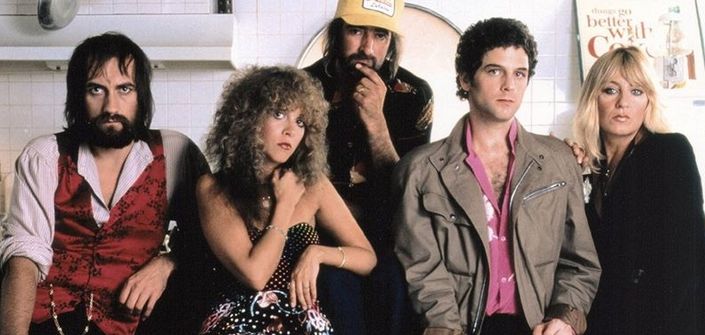
Lindsey Buckingham's re-entry into Fleetwood Mac had been met with great acclaim; having taken a few years away from the band following the aborted Tusk sessions, along with the death of Ozzy Osbourne that made him rethink life choices, Buckingham and the rest of the group looked towards a more optimistic future, as per the lyrics to 1977's "Don't Stop". But now that the band had become a sextet, and four of the members contributed vocals, it became a matter as to how much each member could contribute.

CHRISTINE McVIE: "Stevie, Lindsey, Neil and I each put out solo projects during 1983 and 1984 [Nicks' The Wild Heart, Buckingham's Go Insane, Finn's Conflicting Emotions[5], McVie's eponymous album], but each of us held back a few tracks for our follow up to Mirage. One of the tracks ["Hold Me"] was actually a leftover from those sessions, but when Lindsey came back, we used it for what became The Challenge." (2003)

Crowded House, 1986.
To keep things democratic within the group, it was decided that there would be an even split among the songwriting credits - Buckingham and Stevie Nicks each had three songs, Christine McVie had four ("Hold Me" was a duet with Buckingham) and Neil Finn just two. This averaged out to three songs per songwriter. Nicks found herself working on both The Challenge and her own solo album, Rock a Little, so she didn't contribute much to the sessions on the former aside from backing vocals if needed. Meanwhile, having made few contributions to the album himself, Finn had some other irons in the fire when he formed the Mullanes, which later evolved into Crowded House. By the end of the sessions, he would leave Fleetwood Mac in favor of Crowded House, but they would not release their debut album until 1986.

LINDSEY BUCKINGHAM: "It was a shame when Neil left, but we respected his decision. He did bring some fresh blood to the band in my... er, absence, and I would've liked to see that formation continue." (1990)

The Challenge was finally released in May 1985 and quickly went to #1 in the United States and peaked at #3 in the United Kingdom. It was Fleetwood Mac's only album as a sextet, and it received acclaim upon release. "Hold Me"/"One More Big Time Rock and Roll Star" (#4 US) was the biggest hit from the album, and "Slow Dancing"/"The Challenge" (#14 US), "Got a Hold on Me"/"The Devil You Know" (#7 US) and "Message to My Girl"/"Time Bomb Town" (#22 US) were also Top 40 hits. The B-side "Time Bomb Town" would make a brief appearance on the radio in Back to the Future when Marty McFly (Michael J. Fox) was awoken from his sleep by Doc Brown (Christopher Lloyd) on the phone.

20 May 1985

The Yardbirds - Shaken 'n' Stirred
Released: 20 May 1985
Recorded: 1984
Producer: The Yardbirds, Benji Le Fevre and Tim Palmer

Track listing[6]
Side A
Hip to Hoo
The Only One
Too Loud
Trouble Your Money
I Get a Thrill

Side B
Little by Little
Doo Doo a Do Do
Crackback
Sixes and Sevens

JIMMY PAGE: "I told Robert and John [Paul Jones] that they were driving the Yardbirds into the ground by using more synthesizers and less guitar, and Shaken 'n' Stirred was proof of that. I liked maybe a few of songs on there, but the rest I could've done without. The critics weren't a fan of it, and neither were I and Bonzo." (2010)

The Yardbirds' sixteenth album was a flop by their standards - it didn't broach the Top 10 in either the United Kingdom or the United States (#11 UK, #15 US), and its sole single, "Little by Little"/"Pink and Black" (#83 UK, #36 US) didn't fare any better either. Reception towards Shaken 'n' Stirred was harsh, being cited as one of the Yardbirds' lower efforts, with critics wondering if the band had outstayed their welcome as a group. It would be a few years before the Yardbirds regained some lost ground.

July 1985
John Lennon and his aunt Mimi Smith, circa mid-1960s.
…we came in? The following is excerpted from John Lennon's autobiography, Nowhere Man, originally published under Apple Books, July 1990:

"Bob Geldof and the concert organizers for Live Aid wanted the Beatles to take part in the concert as they believed having a group of 'elder statesmen' of British music would give it greater legitimacy in the eyes of those politicians whose opinions we had to shape up. At first, we didn't want to do this, but we ended up agreeing to perform as it was our kids who persuaded us to take part.

Maddy, Freddie, Alice and I flew out to England like Paul, Ringo and their families did (George, Livvy and Dhani were already there), but while they went to Liverpool to reflect, I wanted to head towards Poole, Dorset first. Aunt Mimi had been living at that bungalow I'd bought for her for the last twenty years, and was still living there at the age of eighty-two. Up until that point, she'd never set eye on Maddy, Freddie and Alice, but she had met Julian and Cynthia before. Even though Mimi was less than half my age, she still wanted to ensure that I was keeping myself out of trouble.

'The guitar's all right, John, but you'll never make a living out of it' was what she'd often tell me in my teenage years, but who'd have thought that thirty years on, she'd still be around to see how much success I'd achieved? I still remind her about that, but Mimi would admit to me that she'd been wrong.

Mimi and I spoke for a long time, and eventually, I asked her, 'Will have the telly on this coming Saturday?'

'Whatever for?' she asked me. I told her about Live Aid and that the Beatles were taking part; this was basically twenty-eight years in the making for us, beginning with meeting Paul after a Quarrymen show in 1957, and although the Beatles have since then had their ups and downs - our reputation was at a low point by then in America, despite having regained some lost ground in England with Thomas the Tank Engine - Live Aid would make or break our good name. I was nervous, and I thought Mimi was the only other person outside of Maddy and the other guys that I could openly express my worries to.

Neither of us said anything for what seemed like an eternity. It was Mimi who broke the silence.

'Well, John,' she said, 'I'll be first to admit that I'd been wrong in saying you'd never make a living out of playing the guitar, but by doing so, from what I've read and heard, you and the rest of the Beatles changed the world and influenced God knows many people. I don't think it should matter to you that much whether or not the performance is good or bad, so long as you're doing what you do the best. Playing music on the stage and entertaining the crowds.'

Again, there was silence. I didn't say anything, but I pulled aunt Mimi in for a hug. She was supporting me right to the end, and I couldn't have been more grateful to have her in my life. I don't recall how much longer we stayed at Mimi's, but I knew we had to head to Liverpool and meet up with the boys.

When we finally arrived there, Paul asked me how the detour went, and I said, 'Just had to see someone from childhood.' I didn't say anymore, but Paul knew exactly who I was referring to.

The thirteenth of July came sooner than we expected, but it was time for the Beatles to head on down to London and play at Wembley Stadium. I was the last one to get down there with Paul, George, Ringo and their families.

'Ah, good morning, John,' Paul said upon noticing my arrival. 'You ready for Wembley?' My response was a nod and a smile. No matter what, it was going to be a hell of performance."

Mimi Smith ended up seeing John Lennon play with the rest of the Beatles at Live Aid on television. She and John continued to remain in contact until her death on 6 December 1991, at the age of 88. Isn't this where…

Footnotes
  1. Most tracks are sourced from OTL's No Jacket Required; "The Man with the Horn" and "I Like the Way" are sourced from Other Sides, and "It's Alright" is a live track from the deluxe edition of Hello, I Must Be Going!. In OTL, it was performed live during the No Jacket Required World Tour, which concluded with Live Aid.
  2. The story takes loose inspiration from the ultimate edition of Batman v Superman: Dawn of Justice and Zack Snyder's Justice League, but with Superman's death being removed altogether.
  3. In OTL, Aerosmith recorded "Come Together" for the Sgt. Pepper film in 1978, and was generally regarded as one of the highlights to the soundtrack. This is also an homage to Gary Clark Jr. and Junkie XL's version of "Come Together" being featured in OTL's Justice League from 2017.
  4. All of Christine McVie's solo tracks are sourced from her eponymous 1984 album. "Slow Dancing" is sourced from Lindsey Buckingham's Go Insane, and "Time Bomb Town" is from the Back to the Future soundtrack. "I Sing for Things" and "No Spoken Word" are from Stevie Nicks' Rock a Little, with "One More Big Time Rock and Roll Star" found on the compilation album Enchanted. Both of Neil Finn's tracks come from Split Enz's Conflicting Emotions. "Can't Go Back" and "Hold Me" are both from Mirage, the only actual Fleetwood Mac songs on The Challenge.
  5. Conflicting Emotions consists of Neil Finn-penned material form Split Enz's album of the same name (excluding "Message to My Girl" and "The Devil You Know") and See Ya 'Round.
  6. Most tracks are sourced from Robert Plants' Shaken 'n' Stirred. "The Only One" (featuring Robert Plant) is from Jimmy Page's Outrider, "I Get a Thrill" (featuring Jimmy Page) from The Honeydrippers: Volume One and "Crackback" (again, featuring Jimmy Page) from John Paul Jones' Scream for Help.
Author's Comments

So here we are with the penultimate chapter of the first draft, and boy, was it a bit of a pain to write up! But I figure it was worth it as we're finally heading towards the endgame.

Not much to say in regards to No Jacket Required, although picking out material for The Challenge wasn't that hard; it was simply a matter of determining the order of the track listing, and how much I wanted to leave the solo projects intact so they could coexist with the new Fleetwood Mac album. Not much to comment on with Shaken 'n' Stirred either, but thankfully, this is the last time I'll have to make a new Yardbirds album as picking out the material was not easy.

As you can tell, we've come back to where we started with the prologue, first published way back in January 2019 (jeez, has it been that long?), and so here we are, two years and seven-and-a-half months later. It's been a long, bumpy road, and I've learned quite a lot when it came to this project. Still, just one more chapter to go.

Monday, August 23, 2021

Chapter 78: Jump (September 1984 - April 1985)

September 14, 1984

Tom Petty & Mudcrutch - Southern Accents
Released: September 14, 1984
Recorded: 1983-1984
Producer: Tom Petty and Jimmy Iovine

Track listing[1]
Side A
Rebels
Trailer
The Image of Me
The Apartment Song [ft. Stevie Nicks]
Crackin' Up
Southern Accents

Side B
Walkin' from the Fire
Big Boss Man
Spike
Dogs on the Run
Mary's New Car
The Best of Everything

The seventh album by Tom Petty & Mudcrutch was a concept album focusing on life in the Southern part of the United States; this was further emphasized with cover versions of Wayne Kemp's "The Image of Me" and Jimmy Reed's "Big Boss Man", also previously covered by Elvis Presley and B.B. King, as well as Nick Lowe's "Crackin' Up", which contained some country influence. Southern Accents (#16 UK, #1 US) was released to positive reception with the lead single "Rebels" reaching #15 in the United States.[2] During the sessions, Tom Petty wrote a few tracks with Eurythmics member David A. Stewart, resulting in the non-album single "Don't Come Around Here No More"/"Make It Better (Forget About Me)" (February 28, 1985 - #22 UK, #5 US) that had a music video inspired from Alice in Wonderland.

November 6, 1984
President George Bush, 1984.
To say that George Bush struggled to live up to the legacy left behind by Ronald Reagan prior to his assassination would be putting it mildly. Reagan had been hoping for the 1980s to be a decade of Conservatism - his British counterpart, Prime Minister Margaret Thatcher, seemed to have had similar thoughts, but her ambition was cut short when the Grand Hotel in Brighton had been bombed on 12 October that year (one day before her 59th birthday), and she was was one of the unfortunate victims.[3] Following Thatcher's death, de facto Deputy Prime Minister William Whitelaw would serve as intern Prime Minister until the next election took place.[4]

Since Reagan's death, things seemed to go badly for President Bush despite his best efforts to lead America. What would become known as the Great Recession in the United States seemed to have had its origins with the 1979 Oil Crisis in the wake of the Iranian Revolution. The Recession further accelerated within Bush's first year in office, and people blamed Bush for what was happening in America.

To make matters worse, Vice President Paul Laxalt - a close friend to Reagan, often referred to as the "First Friend" - was under investigation. Headlines reported embezzlement at the Ormsby House, a hotel and casino in Carson City, Nevada owned by the Laxalt family, suggesting Laxalt himself was tied to organized crime.[5] Laxalt denied these claims greatly, feeling that he had enough to worry about with his duties as vice president, but it didn't stop the public from calling Laxalt "the next Nixon".

Democratic nominee Michael Dukakis, 1984.
As the 1984 election grew closer, Bush announced that he would not be running for a second term as President of the United States. This announcement was met with divided opinions; some were happy at not having to deal with a "failed" president for another four years, while others felt that, had it not been for the Great Recession, Bush could've had a chance to mold his own legacy as President. The Republican Party ended nominating Laxalt as their candidate for the election against Democrat Michael Dukakis, Governor of Massachusetts. Their respective running mates were Senator from Indiana Dan Quayle (Republican) and Senator from Arkansas Dale Bumpers (Democrat).[6]

Despite Laxalt agreeing to a presidential debate, Dukakis declined to participate despite his lead in the polls. Amazingly, this turned out to be a smart move, as there were swarms of reporters asking Laxalt questions about skimming profits from the Ormsby House and the vice president yelling at them, even using the F-word on them. This verbal altercation only served to further harm Laxalt's chances of election.

Come Tuesday, even before all polls nation wide had closed, Michael Dukakis, age 51, was declared the President-elect, with Dale Bumpers, age 59, as the Vice President-elect. The Democratic Party had won in a landslide election for the first time since 1964, when Lyndon Johnson trounced Barry Goldwater 486 to 52, although this margin (442 to 96) wasn't as big, but still sizable.[7] Exhausted, the Republicans knew that they were going to have to do some soul-searching after the last four years, and reshape themselves for the 1988 election.

George Bush congratulated Dukakis on his victory in the election, and come January 20, 1985, Bush would return to a private life with his wife Barbara until her death on April 17, 2018, aged 92. George would also die that same year on November 30, aged 94, as would, coincidentally, Paul Laxalt on August 6, four days after his 96th birthday.

16 November 1984

Kim Beacon - Prospect Road
Released: 16 November 1984
Recorded: July - August 1984
Producer: Phil Collins

Track listing[8]
Side A
Only You Know and I Know
Tell Me
Naked
I Don't Wanna Know
Easy Lover [w/ Phil Collins]

Side B
So Inspired
Let Me Be the One
Doesn't Anybody Stay Together Anymore
Free to Love Again
Prospect Road

Kim Beacon's third solo album was his first collaboration with Phil Collins since the latter's departure from Genesis in 1978. Collins served as the producer for Prospect Road and even played drums on a couple of songs, even singing on "Easy Lover" as part of a duet with Beacon. The sessions took place while Collins was working on his follow-up to Hello, I Must Be Going! (shortly following his marriage to Jill Tavelman) and shortly following Genesis' Shapes Tour, which had ended that February. Since its release, Prospect Road (#1 UK, #5 US) has gone on to be one of the most popular albums of Kim Beacon's solo career, with "Easy Lover" (#1 UK, #2 US) becoming a huge hit. A non-album single from the sessions, "Shine Your Light on Me"/"Those Eyes" (14 January 1985 - #7 UK, #16 US), also charted fairly well.

31 December 1984
RICK ALLEN: "It was absolutely terrifying, with me and Miriam [Barendsen] being involved in that accident on the A57. Everything happened so quickly, and yet I'm very grateful the both of us managed to get out of it with just a few cuts and bruises." (2004)[9]

8 April 1985

Pink Floyd - Identity
Released: 8 April 1985
Recorded: September 1984
Producer: Pink Floyd, Bob Ezrin, Tim Palmer and Rick Fenn

Track listing[10]
Side A
Yolanda
Lie for a Lie
Private Person
You Know I'm Right
Blue Light
Amber and the Amberines

Side B
Yet Another Movie (Round and Round)
How Do You Do It?
Cruise
Let's Get Metaphysical
Seems We Were Dreaming

Pink Floyd's About Face Tour was relatively short compared to others, albeit still quite successful, with shows in the United Kingdom, Europe, the United States and Canada. It was also their first to feature Pete Townshend and Dave Harris as support players. That September, the band returned to the studio to record their follow-up to About Face.

DAVID GILMOUR: "Identity was something of a soft reboot for Pink Floyd. While About Face did well commercially, it didn't really feel like we had any sort of direction. Identity was where we seemed to get back on track again." (2017)

Indeed, Identity managed to reach the #1 spot in both the United Kingdom and the United States, becoming Pink Floyd's most successful album of the 1980s, being compared to a Dark Side of the Moon for said decade. Most of the album had been written during the band's About Face Tour, barring "Lie for a Lie", which was written during the sessions by Nick Mason along with Danny Peyronel and Rick Fenn, the latter of whom also co-produced the album. Although Identity was well-received by fans, critics were more mixed in their opinions, with some even thinking that Pink Floyd had sold out.

Footnotes
  1. Six of the tracks are sourced from OTL's Southern Accents. The remaining tracks are sourced from Playback, excluding "Walkin' from the Fire", sourced from An American Treasure. In addition, the track listing is based upon AEC's reconstruction of Southern Accents but with "The Apartment Song" moved to Side A and "Walkin' from the Fire" opening Side B.
  2. In OTL, while mixing "Rebels", Tom Petty got frustrated and punched a wall, which resulted in surgery on his left hand; this was one of several reasons the band didn't think very highly of the album. In TTL, the "broken hand" incident does not happen.
  3. In OTL, Margaret Thatcher narrowly escaped the blast, and she lived until 8 April 2013, aged 87.
  4. William Whitelaw served as Deputy Prime Minister of the United Kingdom from 1979 (the year Thatcher became Prime Minister) to 1988, when that position was taken over by Sir Geoffrey Howe, who maintained the position until Thatcher's resignation in 1990. Michael Heseltine was the first official Deputy Prime Minister, serving 1995 to 1997. As of 2021, the position is currently not in use.
  5. In 1983, the Sacramento Bee published two articles about Paul Laxalt's business dealings in the early 1970s. This is not going to help Laxalt much in the presidential election in TTL.
  6. Michael Dukakis went against George Bush in the 1988 election and lost. Dan Quayle was Bush's running mate (and eventual Vice President) while Dukakis' running mate was Lloyd Bentsen.
  7. In OTL, Ronald Reagan beat out Walter Mondale 525 to 13, with Mondale winning only Minnesota and Washington, D.C.. This electoral vote total has not been matched before or since.
  8. "Only You Know and I Know", "I Don't Wanna Know" and "Doesn't Anybody Stay Together Anymore" are all sourced from Phil Collins' No Jacket Required. "Easy Lover" is sourced from Philip Bailey's Chinese Wall, a duet with Collins in OTL. The remaining tracks come from a live performance at The Outhouse in Glasgow in 1989.
  9. In OTL, Rick Allen lost his left arm, which meant that Def Leppard would not perform onstage until August 16, 1986 (they declined to play at Live Aid as they were still waiting for him to recover). That was when Allen could play the drums live with only one arm for the first time at the Monsters of Rock festival at Castle Donington. In TTL, as Allen walks away with both arms intact, this means that Def Leppard's Hysteria will be released earlier.
  10. Tracks are sourced from Robert Wyatt's Work in Progress (also found on the compilation album Mid-Eighties), Nick Mason and Rick Fenn's Profiles, Zee's Identity and David Gilmour's About Face. "Yet Another Movie (Round and Round)" is sourced from A Momentary Lapse of Reason, the only true Pink Floyd track on Identity.
Author's Comments

At last, we've reached the chapter which shares the same number as vinyl records running at 78 rotations per minute. :P All jokes aside, we're rounding up more story arcs for the first draft before I finally start work on The Second Coming. Tom Petty and Mudcrutch's was probably the least eventful out of the story arcs given that very little changed apart from adding more songs on their 1976-1985 output (plus creating a pre-1976 album), but hopefully I've managed to make them better by adding in the outtakes which are hopefully just as good as those that made the cut.

However, we're not quite done with the Genesis and Pink Floyd story arcs; there's one more album to go through with Genesis (I think you can guess what it is), and even though we've covered the final Pink Floyd album of the first draft, this is not the last time we'll see them. Admittedly, Identity was not in the original plans, but after looking at what was leftover, plus dipping a little into Robert Wyatt's solo career, I decided there was enough material for another album. For those wondering about their post-1985 discography, Learning to Fly is OTL's A Momentary Lapse of Reason, The Division Bell is unaltered from OTL, and On an Island is their last album before the death of Richard Wright, with The Endless River being a Wright solo album.

As for that little vignette with Rick Allen, I did consider having him killed off and Def Leppard would break up after releasing Hysteria, but I decided against it. I don't think it would've made that much of a difference as the first draft is drawing to a close anyway with two chapters to go (and maybe an extra scene or two).

Monday, June 28, 2021

Chapter 74: Sweet Dreams (Are Made of This) (June - October 1983)

June 17, 1983
Patrick Stewart in Playing Shakespeare, 1982. That same year, it was announced that he had been cast in the role of Brainiac for Superman III. Robert Vaughn was originally considered for the role before Stewart was cast.
A third Superman movie had been in the planning stages since 1979, just as the production on Superman II was closing down. Ilya Salkind, David and Leslie Newman would return to write the script while Richard Donner would pass on directing duties to Tom Mankiewicz (although Donner would stay on as producer). However, John Williams did not return to score the music due to his commitments to Return of the Jedi, and so Ken Thorne took over as composer, with Williams credited for the original Superman themes. Alongside the return of Christopher Reeve, Margot Kidder, Jackie Cooper and Marc McClure, the newcomers were Patrick Stewart as the villain Brainiac, Dudley Moore as Mr. Mxyzptlk and Helen Slater as Kara Zor-El/Linda Danvers, also known as Supergirl.

A mysterious asteroid lands on Earth, which prompts interest from Clark Kent; it turns out to be a space pod from the planet Colu, and its sole occupant is a young woman by the name of Kara Zor-El, who takes on the civilian identity of Linda Danvers, who is later revealed to be Clark's cousin. A flashback reveals that when Krypton exploded, Kara was originally meant to arrive on Earth alongside the baby Kal-El, but her space pod had been knocked off course and she ended up in suspended animation for over twenty years before landing in Colu instead, where she is raised by Brainiac who becomes her surrogate father. While Linda adjusts to life on Earth, she and Clark come across an impish trickster from the fifth dimension known as Mr. Mxyzptlk, who uses his abilities to play pranks.

Some time later, Brainiac lands on Earth, having followed Linda the whole time, hoping that she'll use her abilities to cause destruction, but thanks to Clark's guiding hand, she's using them for good, and if even dubbed "Supergirl" in the press. In retaliation, Brainiac uses a personality machine to corrupt and manipulate Superman, therefore turning him evil. Supergirl fights him and with the help of Lois Lane, restores Superman back to good. A final battle with Brainiac then commences after the group time travels to a fiefdom in the Middle Ages that the villain has taken over, leading to him getting stuck there while the heroes return to the present. At a café, Clark and Linda meet up with Mr. Mxyzptlk (who had helped them travel back to the present) who gives them a cryptic warning about a greater evil coming to Earth.[1]

Helen Slater as Kara Zor-El/Linda Danvers/Supergirl in Superman III, 1983. Not even twenty years old upon the film's release, Superman III marked Slater's cinematic debut, and her performance was acclaimed by critics and fans alike.
CHRISTOPHER REEVE: "For an early draft of Superman III, Ilya wanted to have Brainiac fall in love with Supergirl, his 'daughter', but she was in love with Superman instead, and the cousins would possibly even marry at the end. However, Margot didn't like that, and nor did I, Helen or Patrick. We felt it devalued Superman and Lois' relationship from the first two movies, and so the romance plot was cut out entirely." (2008)

In contrast to the two previous Superman films, critical reaction to the third film ranged from mixed to positive, with criticism being directed at the complexity of the plot and the villain's motivations (although Patrick Stewart's performance was acclaimed; even then, Gene Hackman as Lex Luthor, who did not appear, was generally viewed as the better villain, as was Terence Stamp as General Zod). On the other hand, Helen Slater's performance as Supergirl was praised, as was Dudley Moore as Mr. Mxyzptlk, and the ending left many moviegoers excited about a potential team-up film about the Justice League. This was later confirmed in a press release at the end of 1983, and Justice League was due for a release date in the spring of 1985.

8 July 1983

The Yardbirds - Carouselambra
Released: 8 July 1983
Recorded: 1983
Producer: Robert Plant and Jimmy Page

Track listing[2]
Side A
Other Arms
In the Mood
Messin' with the Mekon
Big Log

Side B
Thru' with the Two Step
Horizontal Departure
Carouselambra

The Yardbirds' fifteenth album was their first since 1969's Going Down Like a Lead Zeppelin to not reach #1 in either the United Kingdom (#3) or the United States (#5) - while Stairway to Heaven and Axe Ivy both reached #1 in the former country, they stalled out at #2 in the latter. Despite this, "Big Log" managed to chart fairly well in the Top 40 on both sides of the Atlantic (#4 UK, #11 US), as did "In the Mood" (#30 UK, #14 US), with both receiving music videos of their own. Critics were mixed towards Carouselambra, and many seemed to reflect on Jimmy Page's thoughts during the recording process:

JIMMY PAGE: "I personally thought Axe Ivy was our best album of the 80s, but Robert and [John Paul] Jones were in over their heads by playing too many synthesizers for Carouselambra. I felt that my work as a guitarist was being pushed to the side and wasn't shy in saying so. I even tried to tell them that if they didn't get a clue, sooner or later, the Yardbirds would be dead faster than you could play the entirety of Robert Johnson's music." (1997)

3 October 1983
Tony Banks, 1982.
In the midst of an eight-month break between the members of Genesis, Tony Banks had recorded his second solo album, The Fugitive, which was later released that June. This was his first album in which he sang the lead vocals instead of relying on a guest vocalist. While A Curious Feeling had some pop elements, they were more upfront in The Fugitive. The album received a mixed to positive response from critics and topped out at #33 in the United Kingdom. "This is Love" was the single preceding the album that May, peaking at #47 in the United Kingdom.

TONY BANKS: "Mike, Kim and I got back together in the spring of '83 to record the follow-up to Abacab, but we didn't have any songs ready for it. We just played some jams and then based the songs around them." (2005)

KIM BEACON: "Tony and Mike each thought about taking a lead vocal on the album, each having done so for their respective solo albums around that time, and I favored the idea, wanting to show that I wasn't the only guy behind Genesis. We were a group effort, and always have been. I think Shapes proves that." (2013)

Genesis - Genesis (The Shapes Album)
Released: 3 October 1983
Recorded: Spring 1983
Producer: Genesis and Glyn Johns

Track listing[3]
Side A
Mama
That's All
Home by the Sea
Promises

Side B
When It All Comes Down
Taking It All Too Hard
Just a Job to Do
Silver Rainbow
It's Gonna Get Better

Genesis' self-titled release, often referred to as The Shapes Album because of the cover, marked their first since 1974's The Lamb Lies Down on Broadway in which all the music was credited to all the members. In addition to that, Tony Banks and Mike Rutherford showed more prominence in performing the backing vocals than they had ever done on any previous album. Among the tracks that has been left unfinished was "Illegal Alien", which was intended to be a satirical approach on undocumented immigrants coming into the United States, although it was abandoned due to the insensitive nature of the lyrics.

Reception to The Shapes Album was generally very positive, topping the charts in the United Kingdom and reaching #3 in the United States, and the first two singles - "Mama" and "That's All" - also reached the Top 10 in both countries, the former even topping the charts in the United Kingdom. The album displayed Genesis heading towards a more radio-friendly approach, and Banks considered the overall sound as something that the band had longed for even when Peter Gabriel was their lead singer. Rutherford would also refer to The Shapes Album as one of his favorite Genesis albums.

Summary of single releases from Genesis' The Shapes Album
  • "Mama" / "It's Gonna Get Better" - 22 August 1983 (#1 UK, #5 US)
  • "That's All" / "Taking It All Too Hard" - 3 October 1983 (#7 UK, #2 US)
  • "Home by the Sea" / "Second Home by the Sea" - 23 January 1984 (#28 UK, #16 US)

Footnotes
  1. The plot synopsis for Superman III is based upon a treatment written by Ilya Salkind in December 1980 and released online in 2007. It was rejected for being too complex and expensive to shoot, which resulted in an entirely different Superman III directed by Richard Lester and a standalone Supergirl movie directed by Jeannot Szwarc in 1984. Both films were critically panned, with the latter becoming a box-office bomb.
  2. All tracks are sourced from Robert Plant's The Principle of Moments, excluding "Carouselambra", taken from In Through the Out Door.
  3. All tracks are sourced from OTL's Genesis (The Shapes Album), excluding "Promises" and "When it All Comes Down", both from a performance by Kim Beacon in 1989. As has been stated many times before, all tracks are performed by Beacon.
Author's Comments

Well, that was the latest chapter for Strawberry Peppers Mk1 done and dusted. It came out later than I would've liked, but I've had a lot of projects to deal with lately, so I ended up working on and off on it; sorry about that. I've only got six more chapters to write up until this first draft is finished. Not much else to talk about here; Genesis and its members are carrying on like normal, Superman's got the third movie it might have gotten with Richard Donner on board, and the Yardbirds are continuing down Robert Plant's solo trajectory from OTL. I was going to include Yes' 90125, but I ended up cutting it instead. That's why I've posted a shorter chapter than usual.

Monday, April 19, 2021

Chapter 71: Ashes to Ashes (April - September 1982)

23 April 1982

The Yardbirds - Axe Ivy
Released: 23 April 1982
Recorded: September 1981 - January 1982
Producer: Robert Plant and Jimmy Page

Track listing[1]
Side A
Burning Down One Side
Moonlight in Samosa
Pledge Pin
Fool in the Rain
Mystery Title

Side B
Worse Than Detroit
Fat Lip
Sea of Love
Swan Song

The Yardbirds' first album of the 1980s, the long-awaited follow up to In Through the Out Door, brought back the return to their rock roots with some rhythm and blues influence. Among them was a cover version of Phil Philips' 1959 hit "Sea of Love", which was released as a single shortly before the release of Axe Ivy, peaking at #3 in the United States. However, it did not chart as well in the United Kingdom, at a comparatively lowly #56. But even that didn't stop the album from topping the charts there (it stalled out at #2 in the United States, kept out of the top spot by Fleetwood Mac's Mirage).

JOHN BONHAM: "The album title Axe Ivy was a play on words; it was the Yardbirds' fourteenth album, and in Roman numerals, it's X-I-V [pronounced "acks"-"eye"-"vee"]. Get it? I came up with it myself; no one else had a good enough idea for the title, so it stuck." (2007)

Axe Ivy received generally positive reception from critics and fans, being regarded as a return to form for the Yardbirds, and the tour that followed up ensured that they would stick around for a long time and still hold their place in the rock and roll world.

14 May 1982

The Clash - Rat Patrol from Fort Bragg
Released: 14 May 1982
Recorded: 1980, September 1981 and November 1981 - January 1982
Producer: The Clash

Track listing[2]
Side A
Straight to Hell
Know Your Rights
Rock the Casbah
Red Angel Dragnet

Side B
Should I Stay or Should I Go
Ghetto Defendant
Sean Flynn

Side C
Car Jamming
The Beautiful People Are Ugly Too
Atom Tan
First Night Back in London

Side D
Inoculated City
Death is a Star
Cool Confusion
Idle in Kangaroo Court

For the past few years, the Clash was one of Apple's most successful punk rock groups, and proved to critics and listeners that they were willing to put anything in their music. Even the most stupid-sounding shit, they turned to gold. But by the end of 1981, the cracks in their relationship were beginning to show.

JOE STRUMMER: "We were basically in two camps by that point; me and Paul [Simonon] on wanting to return to our more punk roots, and Mick [Jones] and Topper [Headon] wanting to continue evolving our sound. It didn't help that Topper was in the midst of a drug addiction." (1997)

MICK JONES: "I was unhappy; I felt estranged from the rest of the group and I was living with Ellen [Foley; his then-girlfriend] in New York. I thought, 'This must have been how Paul McCartney felt when he felt estranged from John, George and Ringo in the early 70s.' It felt like lightning was about to strike twice at Apple Records." (2009)

The Clash in Philadelphia, 1982.
Between January and March, the Clash embarked on their Far East Tour in Japan, Australia, New Zealand, Hong Kong and Thailand. Shortly afterward, they returned to London to listen to the music recorded in New York and decide what to do with the material. In the middle of arguing over how their next album should sound, they heard the news of a tragedy from the other side of the pond.

PAUL SOLOMON: "One of us caught a newspaper article saying that Ozzy Osbourne had choked on his own vomit. What really got to all of us was what Randy Rhoads said concerning his final words to Ozzy. 'You'll kill yourself, you know? One of these days.' It was very damning to read, and that made us realize that one of us could drop dead and we'd live the regret of never making up with him before then. We felt closer as a group, realizing that if we were to stay together, we'd have to cut the crap and make the album that all of us wanted to put out. And after that, we'd take a break for a while." (2007)

Rat Patrol from Fort Bragg came out that May, backed by singles "Know Your Rights" (#30 UK), "Rock the Casbah" (#14 UK, #5 US) and the double A-side, "Should I Stay or Should I Go"/"Straight to Hell" (#10 UK, #37 US), respectively released 23 April, 11 June and 17 September. The album topped the charts in the United Kingdom and peaked at #4 in the United States, becoming the Clash's best selling album to date. As the band was taking a hiatus to sort out their differences and drug problems, it would be a while before the world heard from them again.

Meanwhile, the original album art depicting the execution of Viet Cong member Nguyễn Văn Lém in 1968, photographed by Eddie Adams, sparked controversy due to insensitivity despite that it expressed the direct lyrical references to the Vietnam War and the notion of "urban warfare" that were prominent in the album. In wake of the controversy, the cover was replaced by a band photo.

25 June 1982

Fleetwood Mac - Mirage
Released: 25 June 1982
Recorded: November 1981 - March 1982
Producer: Fleetwood Mac, Richard Dashut and Ken Caillat

Track listing[3]
Side A
Love in Store
Dirty Creature
That's Alright
Log Cabin Fever
Gypsy
Only Over You

Side B
Take a Walk
Straight Back
Put a Candle in the Window
If You Were My Love
Hello Sandy Allen
Wish You Were Here

Fleetwood Mac's first album since 1977's Rumours had come out the week following Crosby, Stills & Nash's Daylight Again under Apple Records, and it was their first to feature Neil Finn as guitarist and vocalist. Mirage carried on with the band's soft rock sound from Rumours and topped the charts in the United States for five weeks, and topped out at #3 in the United Kingdom. Finn's "Dirty Creature", Stevie Nicks' "Gypsy" and Christine McVie's "Love in Store" were all Top 20 hits in the United States.

MICK FLEETWOOD: "It was just before Mirage came out when Lindsey reached out to me and John a few days after Ozzy Osbourne was declared dead from excessive drinking. I could see that he clearly regretted his behavior following the aborted Tusk sessions, and it seemed as if a few years away from us had given him a lot of time to work on his behavior." (1998)

STEVIE NICKS: "Christine and I were reluctant to let him back into the band - Neil didn't have an opinion on the matter, for he stayed to the sides to see what would unfold. Lindsey had hurt Christine the most, and she was afraid of being in the same recording studio as him, just in case he had another meltdown. But still, we gave Lindsey the benefit of the doubt and let him join us for our short American tour." (2014)

Fleetwood Mac, 1982. Not pictured: Neil Finn.
Lindsey Buckingham's return to Fleetwood Mac for their Mirage Tour (September 1 - October 31) also coincided with the band headlining the first US Festival in San Bernardino on September 5, for which they were paid half a million dollars. Among other artists during September 3-5 included the Ramones, Talking Heads, Dave Edmunds, the Cars, Pat Benatar and Tom Petty & Mudcrutch, some of whom were under Apple Records or its two subsidiaries, Highway 61 or Swan Song.[4]

The tour was met with a few hiccups, but fortunately, none were connected to band relations. On October 5, Stevie Nicks' best friend, Robin Anderson, had died from leukemia at the age of 34, following a pregnancy leading to a premature birth to a baby boy, Matthew - thankfully, he survived. After the death of Robin, Nicks would give off some of her most electrifying, heartfelt performances as a tribute to her fallen friend, later impulsively marrying her widower Kim Anderson in 1983, thinking that it would be best for Matthew. Sadly, Stevie and Kim would separate after only three months, and divorce by 1984.

Around the time of Robin's death, two shows were postponed when Nicks suffered from walking pneumonia, but soon recovered. The October 22 show at The Forum in Inglewood was filmed and later released under the title Fleetwood Mac In Concert - Mirage Tour '82 under Apple Films. Lindsey Buckingham would remember that for just about every show, it felt as though he had never left to begin with, finally being integrated back into the band. When asked what Fleetwood Mac's plans for the future were, he said, "Who knows? We might do another album. Hopefully it won't take five years to put out!"

Summary of Fleetwood Mac releases, 1982
  • "Dirty Creature"  / "That's Alright" - 11 June 1982 (#85 UK, #14 US)
  • Mirage - 25 June 1982 (#3 UK, #1 US)
  • "Gypsy" / "Cool Water" - 4 September 1982 (#34 UK, #7 US)
  • "Love in Store" / "Take a Walk" - 18 October 1982 (#10 US)
  • "Hello Sandy Allen" / "Only Over You" - 12 December 1982 (#71 UK)

4 September 1982

The Who - It's Hard
Released: 4 September 1982
Recorded: June 1982
Producer: Glyn Johns

Track listing[5]
Side A
Athena
It's Your Turn
Cooks County
It's Hard
Dangerous
Eminence Front

Side B
I've Known No War
One Life's Enough
One at a Time
Why Did I Fall for That
Man on the Corner
Cry If You Want

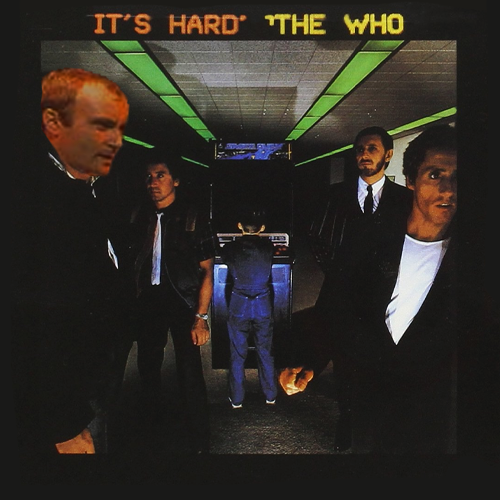
The Who's second post-Keith Moon album, It's Hard (#11 UK, #8 US), received polarizing reviews from critics. Some praised it and even considered it a spiritual sequel to Lifehouse from a decade prior, while others condemned the album, some even going so far as to say Phil Collins had "ruined" the Who. Having a solo career alongside his position as their drummer likely didn't help the hostility towards Collins either. "Athena" backed with the non-album B-side "A Man is a Man" was released as a single at the same time as It's Hard, reaching #40 in the United Kingdom and #28 in the United States. Neither of the follow up singles - "Eminence Front" (25 December 1982) and "It's Hard" (February 1983) - reached the Top 40 in either country.

PHIL COLLINS: "It was a pretty miserable time to be a part of the Who; Pete [Townshend] was depressed, often under heroin and constantly fighting with Roger [Daltrey] and John [Entwistle] over what to play on stage. I just sat there and let everything unfold. I almost regretted leaving Genesis in the first place, wondering what might have happened had I decided to stay with them." (2002)

The Who would embark on a farewell tour in North America with the Yardbirds as support, with the final show taking place on December 17 in Toronto, Canada.[6] Pete Townshend would spend part of 1983 writing new material for a potential follow-up to It's Hard, but was unable to come up with music that would be good enough for the Who to record, and so on 16 December 1983, he announced his departure from the Who, which ended the band for good. This left Phil Collins free to focus on his solo career for the remainder of the 1980s, although he would still play with them for live performances up until 1989.[7]

Footnotes
  1. "Fool in the Right" is sourced from In Through the Out Door, "Sea of Love" from The Honeydrippers: Volume One, and "Swan Song" is "Midnight Moonlight" from The Firm. The remaining tracks all come from Robert Plant's solo album Pictures at Eleven.
  2. Track listing is based upon what Mick Jones proposed for Rat Patrol from Fort Bragg before it was pruned down to become Combat Rock. The four outtakes ("The Beautiful People Are Ugly Too", "First Night Back in London", "Cool Confusion", "Idle in Kangaroo Court") can be found on the 2013 box set Sound System.
  3. Neil Finn's tracks ("Dirty Creature", "Log Cabin Fever", "Take a Walk", "Hello Sandy Allen") are all taken from Time and Tide, due to Split Enz breaking up earlier than in OTL. The remaining tracks are sourced from OTL's Mirage, with "Put a Candle in the Window" and "If You Were My Love" being outtakes from the same sessions, found on the 2016 deluxe edition. The latter track was eventually re-recorded for Stevie Nicks' 24 Karat Gold: Songs from the Vault in 2014.
  4. This actually happened in OTL, except it was during Lindsey Buckingham's final tour with Fleetwood Mac until 1997.
  5. "Man on the Corner" is sourced from Genesis' Abacab, taking the place of "A Man is a Man". Otherwise, It's Hard follows the exact same track listing as OTL. In addition, Roger Daltrey takes lead vocals on "Man on the Corner" while Phil Collins sings co-lead on "Cooks County" instead of Pete Townshend.
  6. In OTL, the Clash went on tour with the Who; because of the former taking a hiatus by that point, the Yardbirds take their place instead.
  7. In OTL, Kenney Jones played with the Who for one-off performances at Live Aid in 1985 and at the BPI Awards Ceremony in 1988, as well as their 25th anniversary tour in 1989. He was not, however, invited for their performance at the Rock and Roll Hall of Fame Induction Ceremony in 1990, and in 1996, Zak Starkey became the Who's new touring drummer starting with their Quadrophenia Tour. With Phil Collins on board, all of this will happen.
Author's Comments

Not much to comment on here; a fair number of storylines are coming to close. The Yardbirds' 1980s discography will draw parallels to Robert Plant's (I mean, he is the lead singer of Led Zeppelin, after all), and those of the Clash and Fleetwood Mac will be revisited once more in 1985 in universe. The Who's storyline is just about finished barring their appearance at Live Aid, which I'm sure most of you can predict, but we will hear from Phil Collins once more in 1985.

Monday, April 12, 2021

Chapter 70: I Love Rock 'n' Roll (August 1981 - October 1982)

24 August 1981

The Rolling Stones - Tattoo You
Released: 24 August 1981
Recorded: 22 January - 19 October 1979 and October 1980 - June 1981
Producer: The Glimmer Twins

Track listing[1]
Side A
Hang Fire
Everything is Turning to Gold
Petrol Blues
Lost and Lonely
Neighbours

Side B
Down in the Hole
Heaven
Let Me Go
She's So Cold

The Rolling Stones' most recent release marked the end of a quadrilogy of albums featuring tracks that were written at the tail end of the 1970s and into the start of the 1980s. Tattoo You hit #1 in the United States for two weeks in the middle of the Beatles' return to the spotlight with Quadruple Fantasy; however, the Stones' album was kept off the top spot in the United Kingdom by the Beatles' album. The sole single off of Tattoo You, "Hang Fire" backed with "Neighbours" (#7 UK, #2 US), was released on 14 August, ten days before the album. Critical reception was generally very positive.

MICK JAGGER: "We were feeling pretty burned out by the time we'd finished up Tattoo You before we toured America in 1981 and Europe in 1982. Keith and I were at one another's throats half of the time, and we really needed a break from each other. So, *chuckles* the Beatles got back together in the 80s, and the Stones took a break that same time as well." (2012)

The Rolling Stones' last concert was on 25 July 1982 in Leeds, the day before Mick Jagger's 39th birthday, and shortly afterward, he, Keith Richards, Ronnie Wood, Bill Wyman and Charlie Watts took a hiatus as a group to focus on side projects and sort out their differences. It would be about six years before they were together again as a group.[2]

20 November 1981

Pink Floyd - Fictitious Sports
Released: 20 November 1981
Recorded: May - August 1981
Producer: Pink Floyd

Track listing[3]
Side A
Holiday
No Way
Mad Yannis Dance
Hot River
I Can't Breathe Anymore

Side B
Waves
Cry from the Street
I Was Wrong
Raise My Rent
Pink's Song

Pink Floyd's follow-up to Mihalis consisted of material that was written during the same sessions, but they were held back for a follow-up shortly after the tour. Like Mihalis, Fictitious Sports was recorded fairly quickly, with "Hot River" occupying a week to record during the sessions, with Karen Kraft making a guest appearance alongside Robert Wyatt on vocals. Although the production credit went to Pink Floyd as a group, it was mainly David Gilmour and Nick Mason who did most of the production work.

Fictitious Sports reached #1 in the United Kingdom just as the hype over the Beatles' Quadruple Fantasy was calming down, and #4 in the United States. The success of Mihalis ensured that Pink Floyd would recover financially, and Fictitious Sports would go on to prove that it wasn't just a lucky break, even though there were no singles to promote the album at first. "Holiday" and "I Can't Breathe Anymore" would end up being released as a single due to audience demand. Roger Waters would call Fictitious Sports his favorite Pink Floyd album following his departure.

15 January 1982

Kim Beacon - Talking to Myself
Released: 15 January 1982
Recorded: 1981
Producer: Kim Beacon and David Hentschel

Track listing[4]
Side A
Tempted
Destiny
Hurt Inside
Third Time
Behind the Lines

Side B
Crossfire
Honest Man
If I Had You
Foolish Isle
Back Again

Kim Beacon's follow-up to Ravenna had been recorded in 1981, but with Phil Collins' Face Value and Genesis' Abacab coming out that same year, it was decided to hold back Talking to Myself for next year. However, the lead single, "Tempted" backed with Beacon's re-recording of "Behind the Lines", was released in December for a Christmas release. Elvis Costello and Chris Difford of Squeeze contributed backing lines to the A-side, originally intended for Squeeze's own East Side Story.[5]

March 19 - 21, 1982
Ozzy Osbourne performing live, one of his final performances prior to his death in 1982.
Following his departure from Black Sabbath in 1979 due to drug and alcohol problems, Ozzy Osbourne had taken on a solo career beginning with 1980's Blizzard of Ozz and following that with 1981's Diary of a Madman. Both albums were well-received and charted very well with hits such as "Crazy Train", "Mr. Crowley" and "Flying High Again". For how talented Osbourne was, his behavior off stage was very well documented.

In 1981, when invited to a meeting with the head of CBS Europe in Germany, Osbourne was intoxicated and had performed a goose-step up and down the table and took a piss in the executive's wine.[6] That same year, after signing his first solo career record deal in Los Angeles, Osbourne had bit the head off a dove, initially planning to release doves into the air as a peace offering, but again, because of his intoxication, he had forgotten. On January 28, 1982, Osbourne bit the head off a bat that he thought was rubber in the midst of a performance at the Veterans Memorial Auditorium, resulting in him being treated for rabies. A few weeks later, on February 18, while wearing his fiancé Sharon Arden's (daughter of Don Arden, former manager of Electric Light Orchestra) dress, Osbourne had drunkenly urinated on a cenotaph near the Alamo that was dedicated to those who died at the famous battle in Texas. Osbourne had been arrested and was later banned from San Antonio.

His antics were becoming frustrating to deal with to his backing band Randy Rhoads (guitar), Rudy Sarzo (bass), Tommy Aldridge (drums) and Don Airey (keyboards). Osbourne was in a state of near-constant inebriation and whenever he was hungover, he would not perform; when he did, performances would suffer due to Osbourne's voice being damaged from excessive smoking and drinking. His mood swings when drunk had gotten so unpredictable and violent that everyone involved was at the end of their rope.

Randy Rhoads performing live during the Diary of a Madman Tour, December 1981.
RANDY RHOADS: "'You'll kill yourself, you know? One of these days.' That was the very last thing I ever said to Ozzy while we were heading to the Tangerine Bowl in Orlando. I was fed up with his heavy drinking and was planning to leave and learn classical guitar at UCLA. I still did so, but I wish I'd parted ways with Ozzy on better terms." (2002)[7]

The performance at Knoxville Civic Coliseum in Tennessee turned out to be Ozzy Osbourne's final ever show, as on the morning they were due to perform at the Tangerine Bowl, he was found dead; an autopsy confirmed that he had choked on his own vomit. A promising solo career had been cut short, and as a result of Osbourne's death, the rest of the Diary of a Madman Tour was cancelled. Many rock and heavy metal acts paid tribute to the fallen pioneer of heavy metal.

Black Sabbath had been at odds with their new vocalist Ronnie James Dio over the mixing of their live album Live Evil, but in the wake of Osbourne's death, they put their differences aside, becoming closer than ever before. They would continue with Dio until his death in 2010. Lindsey Buckingham was affected greatly by Osbourne's death despite not knowing him personally, and he began reaching out to his former Fleetwood Mac bandmates beginning with Mick Fleetwood and John McVie, who were willing to speak with him again following his meltdown during the aborted Tusk sessions. Christine McVie and Stevie Nicks, however, were a different matter altogether, but they gave Lindsey the chance to prove that he had changed for the better.

Thelma Riley, Osbourne's ex-wife, was now the guardian of his estate, and their daughter Jessica (born 1972) would not be able to inherit his royalties from both his solo career and time in Black Sabbath until she was eighteen. The Osbourne family fought hard to protect what would become Jessica's inheritance that would lead to a legal fight lasting up until next year. Meanwhile, Sharon Arden would continue her role as manager while Thelma acted as guardian to Osbourne's estate.

21 May - 1 October 1982

Genesis - 3x3
Released: 21 May 1982
Recorded: May - June 1981
Producer: Genesis

Track listing[8]
Side A
Keep It Dark
Who Dunnit?

Side B
Another Record

Genesis' newest release was an extended play, their second following 1977's Spot the Gorilla, which had consisted of three outtakes from Wind & Wuthering. Like Spot the Gorilla, 3x3 consisted of three outtakes from the Abacab sessions, these being the more esoteric tracks that didn't fit the tone of the album. Alongside the release of the extended play, "Keep It Dark" and "Who Dunnit?" (#20 UK) were released together as a single, albeit on 15 May. 3x3 was not one of Genesis' stronger releases despite reaching #10 in the United Kingdom, but it would later go down as a collector's item.

The final release of the year by Genesis, either as a group or by an individual member, was Mike Rutherford's Acting Very Strange (#16 UK, #84 US), released 7 September 1982. The lead single, "Halfway There", was a minor hit in the United States, peaking at #29. Although Rutherford was not normally known for his vocal performances, the single's modest success encouraged him (as well as Tony Banks) to consider getting a few vocal spots on later Genesis releases.

Peter Gabriel, 1982.
KIM BEACON: "At the start of October, we had a reunion concert with Peter [Gabriel] and Steve [Hackett]. It had been a while since Mike, Tony and I played with Steve - and back when Phil was still in the band - and I'd interacted with Peter before. Chester [Thompson] and Daryl [Stuermer] were there, but Phil wasn't, due to his commitments with the Who. We were in Buckinghamshire, and they were to play at the St. Paul Civic Center in America tomorrow. No way Phil could've played at both shows back to back. I do wish he had been available that day; we'd have had every member of Genesis since 1971 playing on the same night together." (2015)

The Seven of the Best concert took place at the National Bowl in Milton Keynes in Buckinghamshire, England, shortly following Genesis' tour of North America and Europe in August and September. The concert had been organized by their former front man/lead vocalist Peter Gabriel to raise money for his World of Music, Arts and Dance (WOMAD) project which had been in severe financial debt after its disastrous debut in 1980 due to lack of suitable transport to the venue and a lack of publicity.

Genesis with Peter Gabriel and Steve Hackett - Seven of the Best, 1 October 1982[9]
The National Bowl, Milton Keynes, Buckinghamshire, England - 1 show

Setlist:
1. Back in N.Y.C.
2. Dancing with the Moonlit Knight
3. The Carpet Crawlers
4. Firth of Fifth
5. The Musical Box
6. Solsbury Hill
7. Turn It On Again
8. The Lamb Lies Down on Broadway
9. Fly on a Windshield
10. Broadway Melody of 1974
11. In the Cage
12. Supper's Ready
13. I Know What I Like (In Your Wardrobe)
14. The Knife

Former Genesis guitarist Steve Hackett had come in a week earlier to rehearse with the band, playing for the whole show. When it came to playing "Turn It On Again", the roles were switched up; Kim Beacon took lead vocals, Peter Gabriel on drums, Steve Hackett on bass, and Mike Rutherford on rhythm guitar (he had also done so for some older songs). Only Tony Banks remained on keyboards throughout. Daryl Stuermer traded some lead guitar lines with Hackett, doing some dual lead work akin to the Allman Brothers. Weather conditions were very good, so the entire concert was filmed and later released as a live album and film, Seven of the Best, credited to Genesis with Peter Gabriel and Steve Hackett, and even released under Apple Films.

PHIL COLLINS: "Not playing with the rest of the group for Seven of the Best is one of my biggest regrets. If the Who weren't on tour during that time, I'd have come on board to play drums with them. I still see Kim, Tony or Mike, sometimes all three, at parties and other things like that, but we're all busy with our own thing, so we don't collaborate that much. We're all still good friends, but they don't see a need for me to come back." (2011)

Footnotes
  1. Tracks are sourced from Tattoo You and Emotional Rescue; the exceptions are "Everything is Turning to Gold" (a non-album B-side), "Petrol Blues" (from the 2011 reissue of Some Girls) and "Lost and Lonely" (from Ronnie Wood's Gimme Some Neck).
  2. Between 1982 and 1989, the Rolling Stones put out two albums - Undercover (1983) and Dirty Work (1986) - neither of which are viewed very positively among critics and fans. Some songs might exist as solo releases, but I will not be going into heavy detail about that.
  3. Much like its predecessor Mihalis, tracks are sourced from Richard Wright's Wet Dream, David Gilmour's 1978 eponymous album, and Nick Mason's Fictitious Sports.
  4. All tracks are sourced from OTL's Talking to Myself, excluding "Tempted" from Squeeze's East Side Story and "Behind the Lines" from Phil Collins' Face Value.
  5. For East Side Story in TTL, the B-side "Yap Yap Yap" takes the place of "Tempted".
  6. That is the story according to Sharon Osbourne; Ozzy claimed that he performed a strip tease on the table and kissed a CBS Europe executive on the lips. Sharon claims that Ozzy was too drunk to remember.
  7. Randy Rhoads was intending to take up classical guitar at UCLA before he was killed in the plane crash (the second flight does not take place in TTL). His last words to Ozzy Osbourne are verbatim to OTL.
  8. All tracks are sourced from Abacab. Kim Beacon sings lead vocals on all of the tracks.
  9. In OTL, the performance took place on October 2, Mike Rutherford's 32nd birthday. In addition, weather conditions were poor, and several audience recordings have since come out.
Author's Comments

So here we are with the seventieth chapter of Strawberry Peppers Mark 1! This also marks the last major appearance of the Rolling Stones as a group, although not to fear; we shall see from David Bowie once more in a later chapter. Pink Floyd's story will also continue for a few chapters more, as will that of Roger Waters' solo career. As for Genesis, the most frustrating storyline for Mark 1, they'll receive some focus for a few more chapters as we get into the 1983-1985 part of the story. The final runtime for Mark 1 will be 80 chapters, if you exclude the prologue and two intermissions, which is a nice round number.

And of course, there's a brief vignette with Ozzy Osbourne dying in the midst of his Diary of a Madman Tour, with the second flight that killed Randy Rhoads never taking place. That was very much inspired from the seemingly abandoned alternate history timeline, In the Heart of Metal, from which I also took influence for the DC Appleverse. Even though it's a minor subplot at most, it does have an impact which you'll soon see within the next ten chapters. Here's hoping I get them all done by the end of 2021! And on a more frequent basis.